Beyond The Action: Stories from the Sidelines.
Who gets to tell a story?
It’s a question I’ve heard repeatedly come up over the last few years - at events, on panels, in creative circles. And it’s a question that’s informed how I think about my role as a photographer.
I generally feel there are two main avenues when it comes to deciding which story to tell next. One option is to tell my own story - or stories - because like any other human, I have a rich life full of experiences, passions and things I want to say about the world. The other option is to tell the stories of other people, other places, other communities. From a professional photography point of view - whether that’s event photography, travel and tourism photography or editorial photography - that’s my bread and butter.
This second option, however, comes with a wider conversation about who has the right to tell what stories. Some of these discussions focus on underrepresented groups and communities, and I completely accept that in some situations certain filmmakers, photographers and writers simply can’t access a space in the way that’s required or may not have the sensitivities to do it justice.
But I don’t believe this applies to every story.
I don’t believe that just because I don’t come from a particular place or community, or don’t have a deep pre-existing understanding of an event or issue, that I’m unequipped to tell a powerful, sensitive and nuanced story.
Because fundamentally, storytelling is a matter of perspective.
No two people see the world in exactly the same way. We are all formed by our values, our beliefs, our experiences, our backgrounds. Which means that everyone brings something different to a narrative - whether they’re in front of the camera or behind it. Every photographer, filmmaker and writer I know approaches a brief or project differently. No two creatives would cover the same shoot in the same way.
And I’ve come to realise that my unique way of seeing is one of the key strengths of my work.
Let me explain.
Rugby.
Except for a brief period when a college girlfriend played for the women’s team, a trip to New Zealand in 2005 that coincided with the British and Irish Lions’ tour, and more recently following the incredible rise of women’s rugby (and women’s sport more broadly) in the UK , I don’t know very much about rugby at all.
Yet one of my regular clients is the Rugby Journal, a quarterly print publication with beautiful design and varied long-form content. They deliberately seek out photographers who aren’t typical match-day sports shooters. They want different eyes, different voices, different artistic instincts.
And what they get from me is my take on a rugby match.
It begins with the atmosphere.
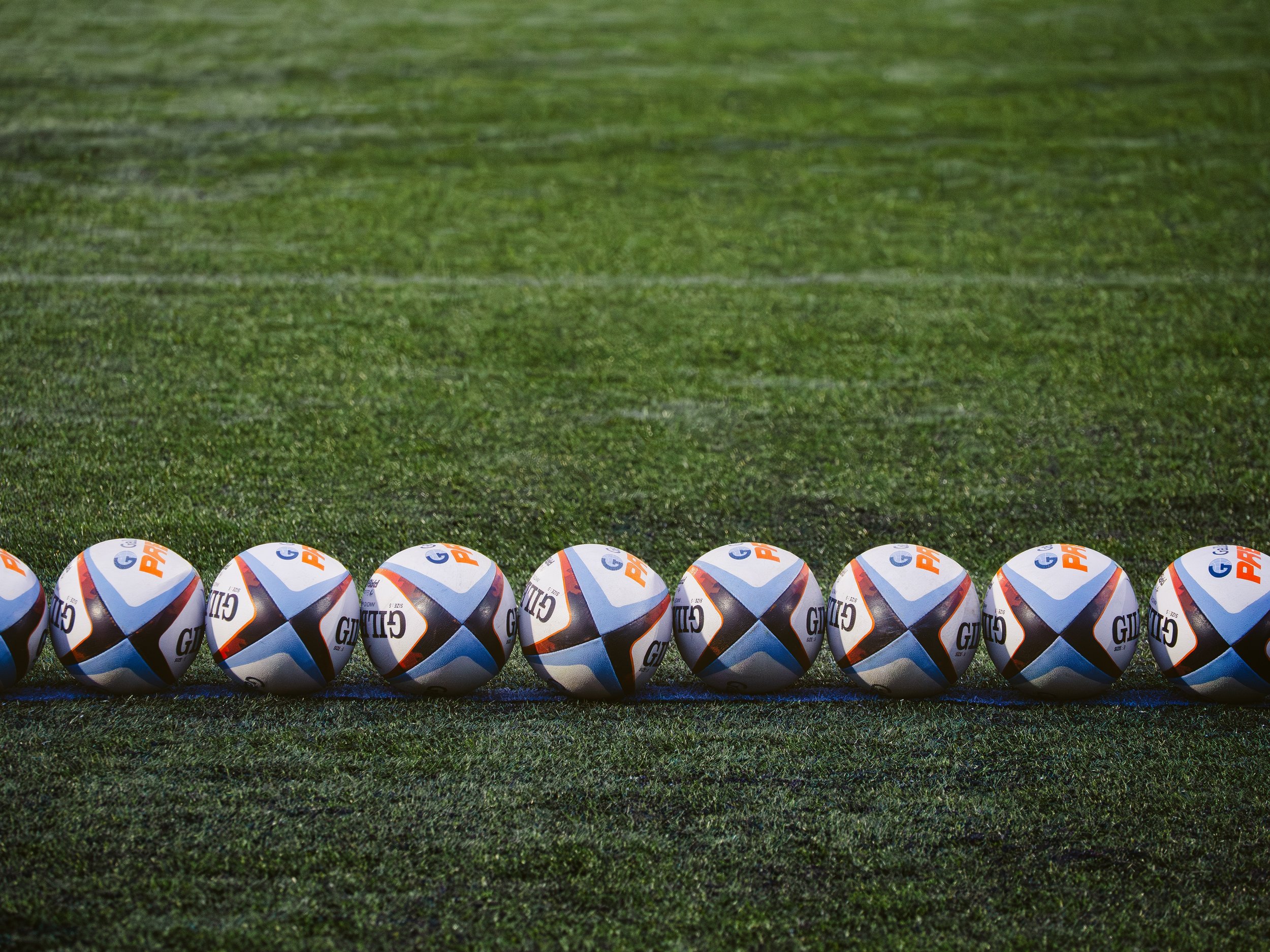
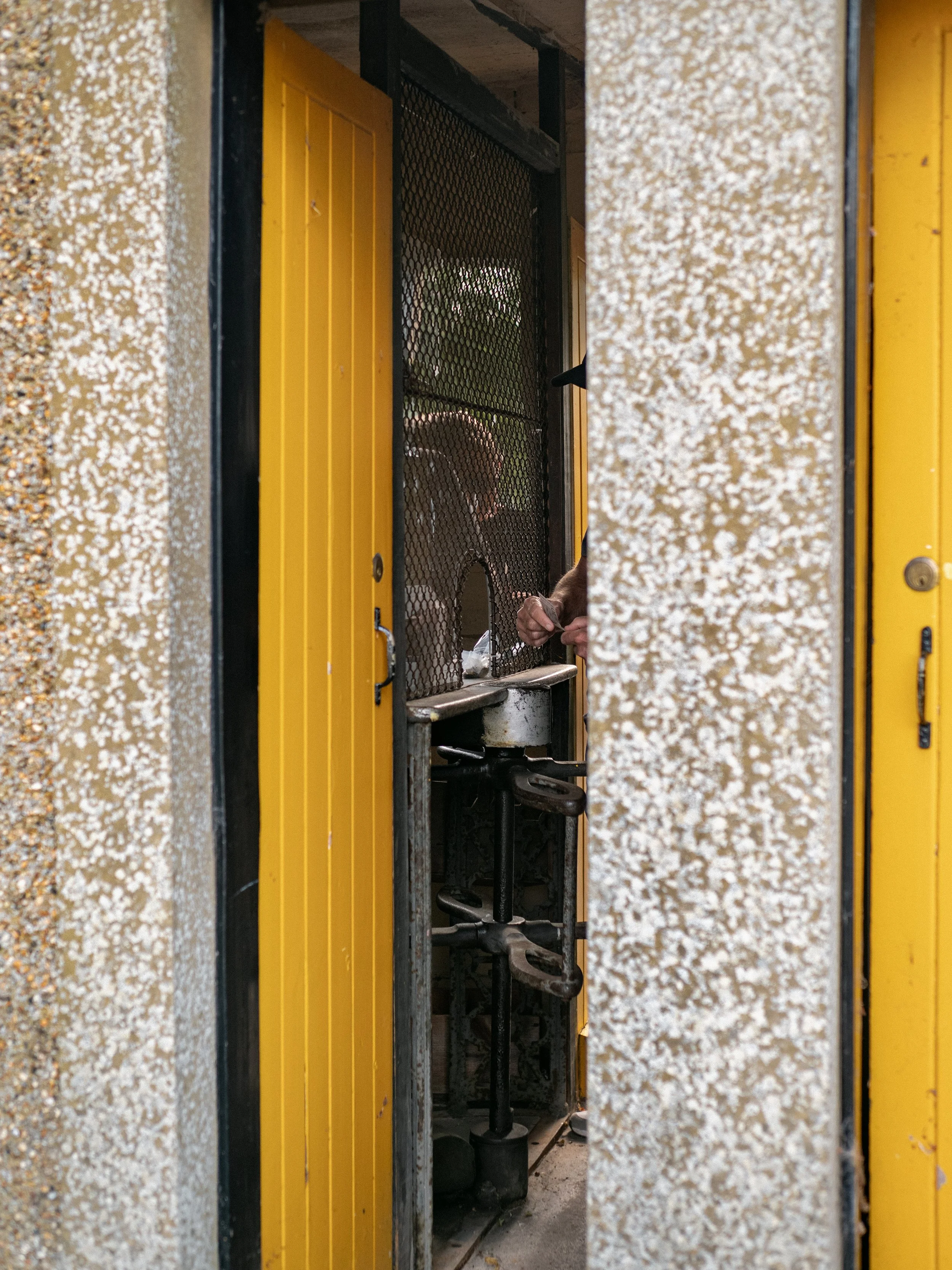
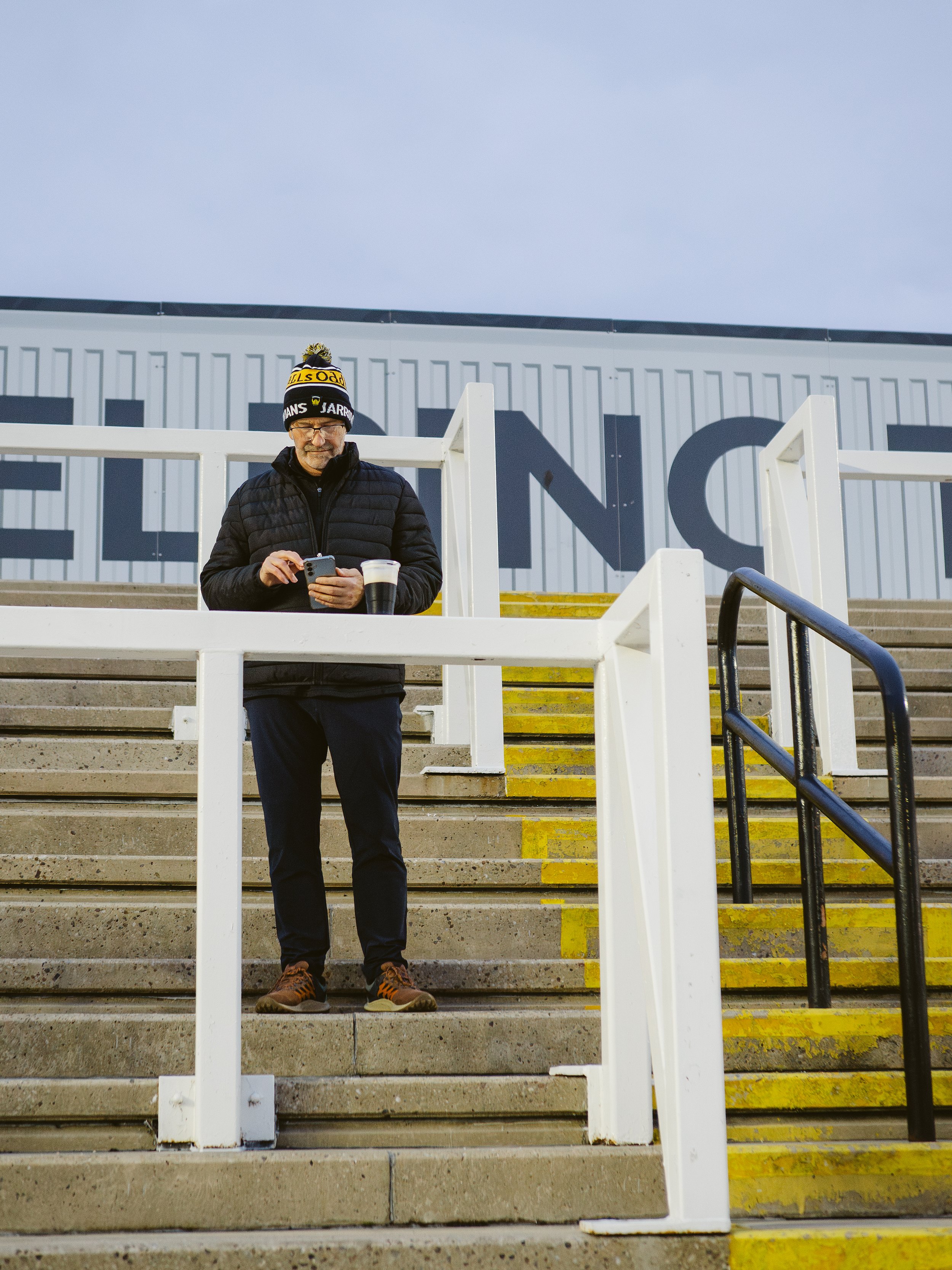
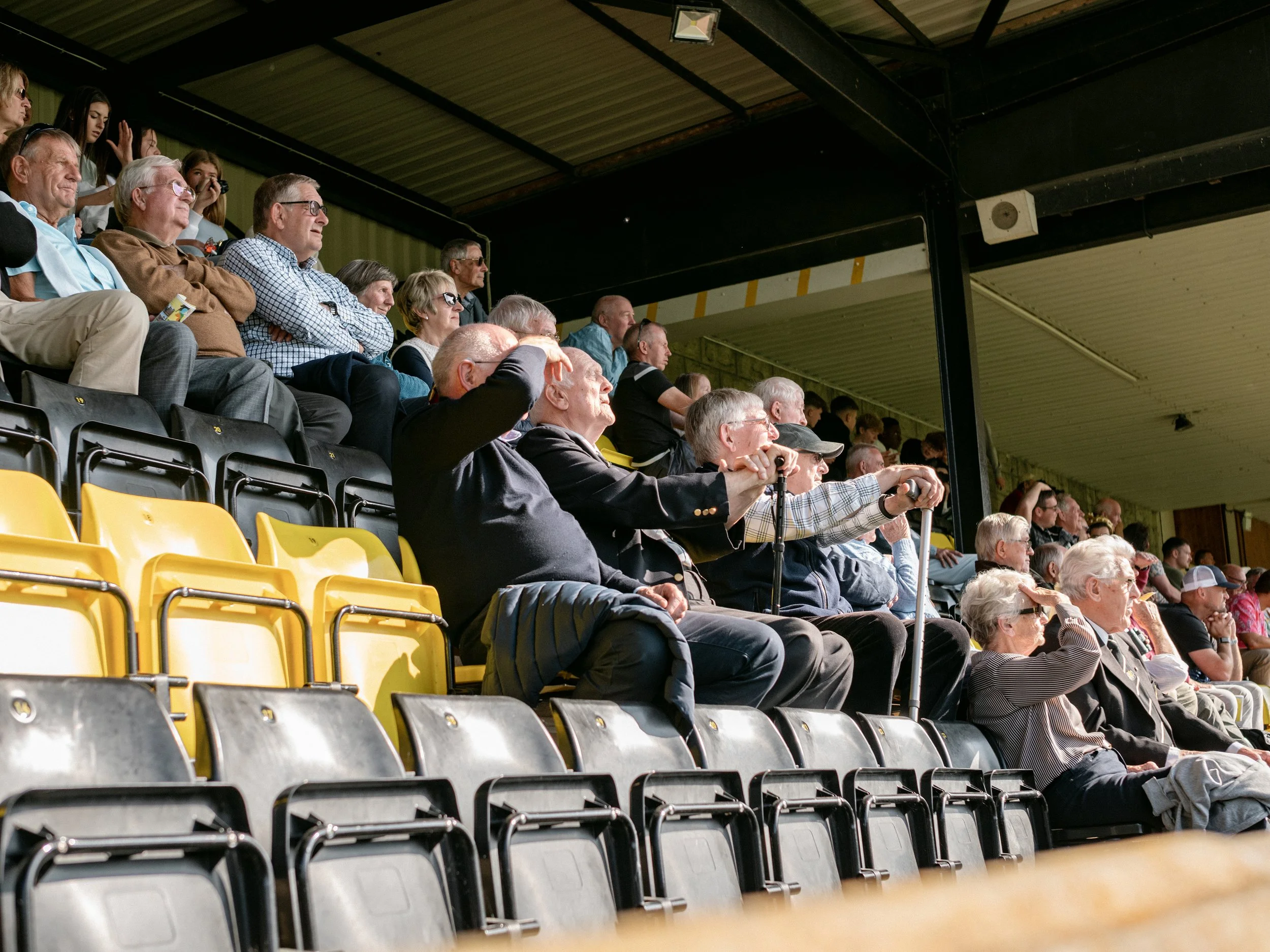
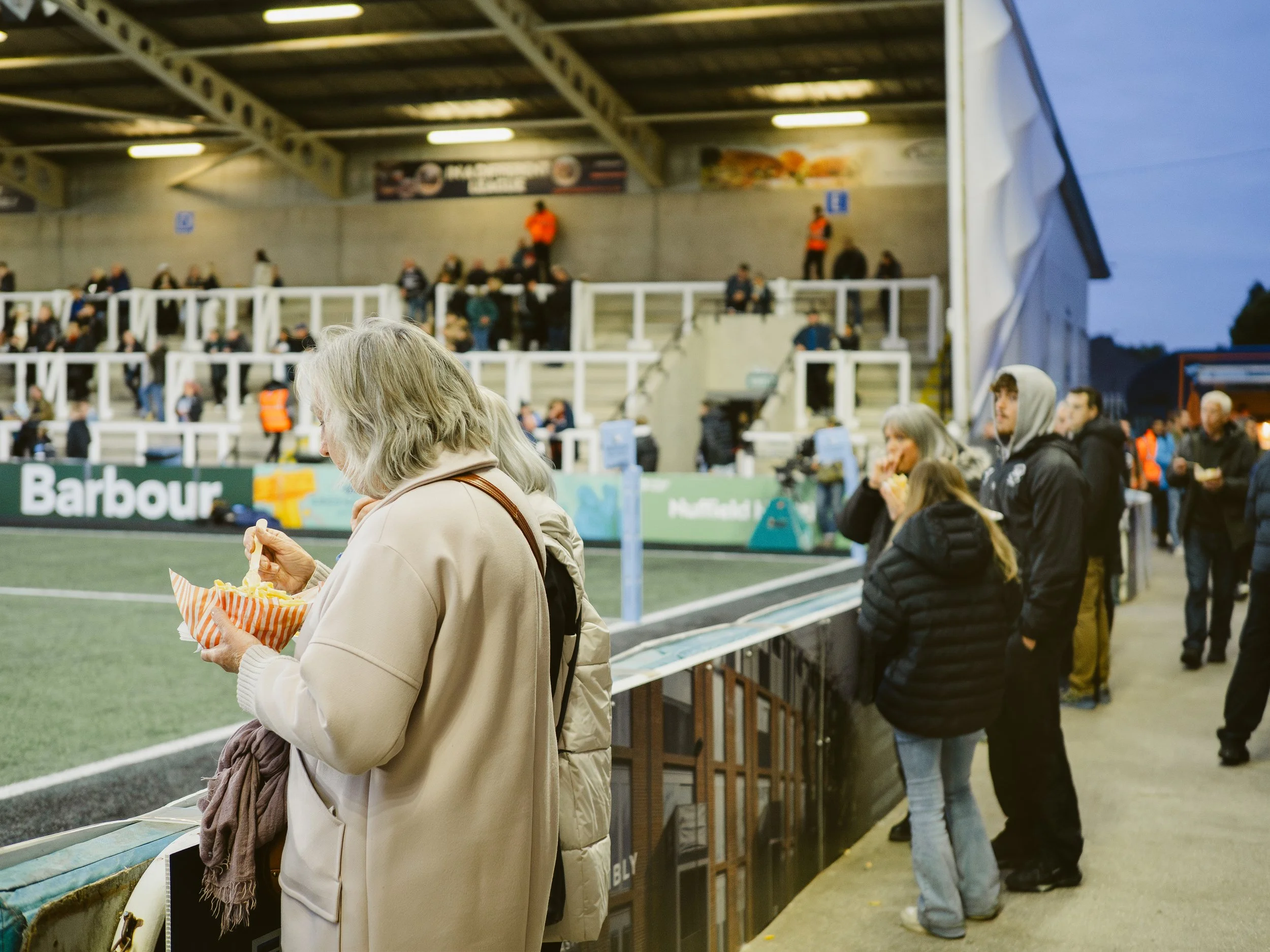
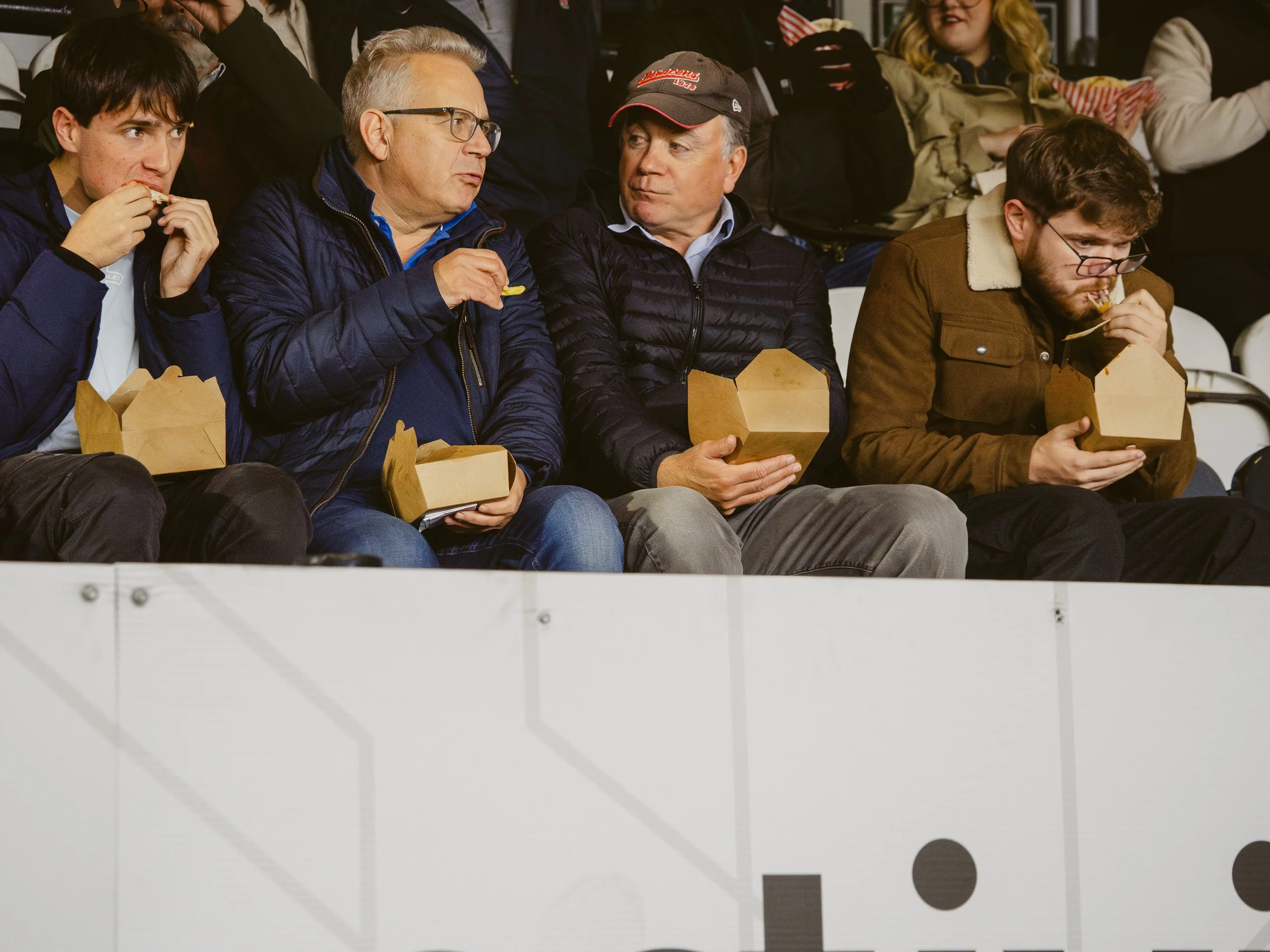
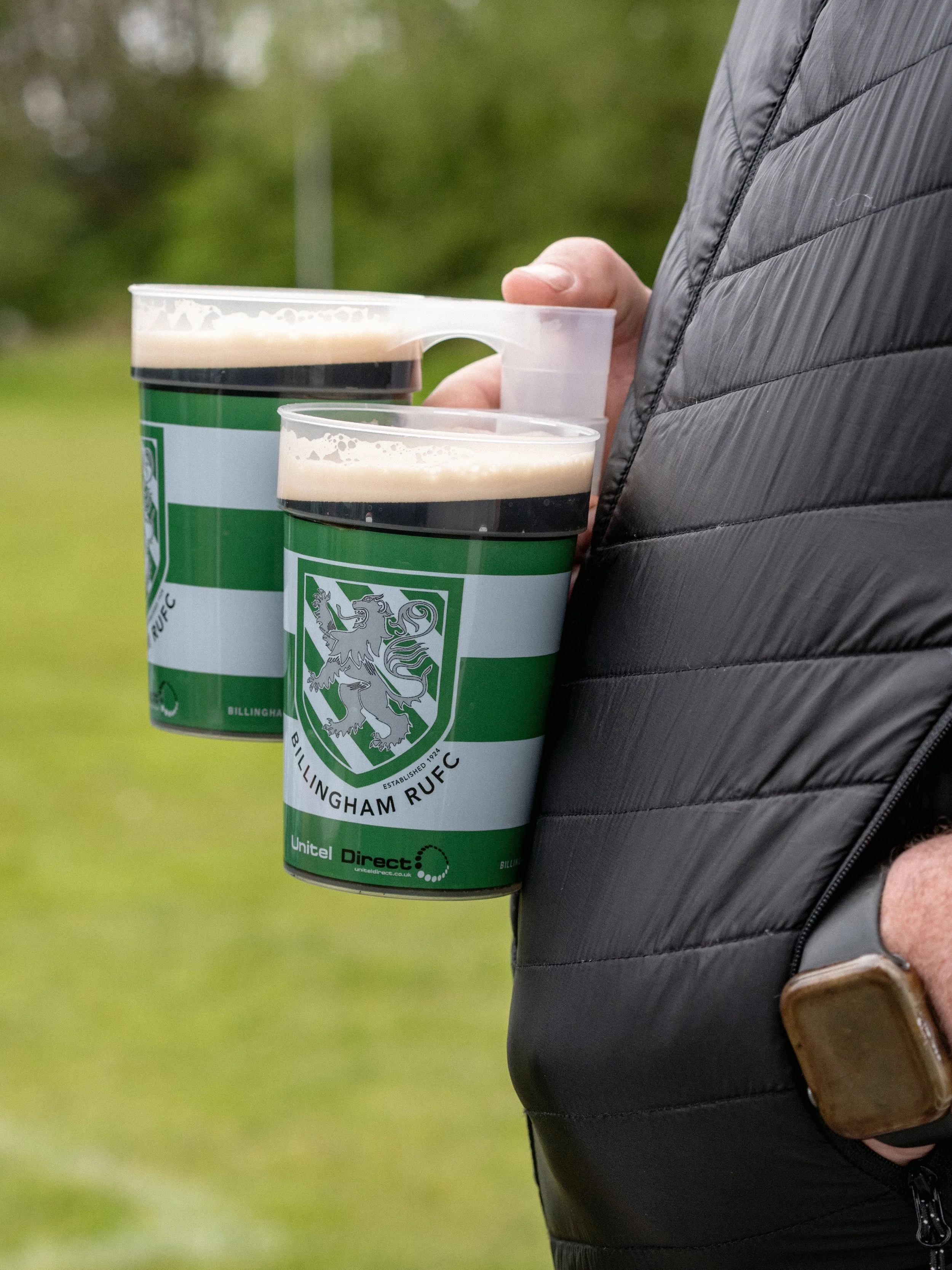
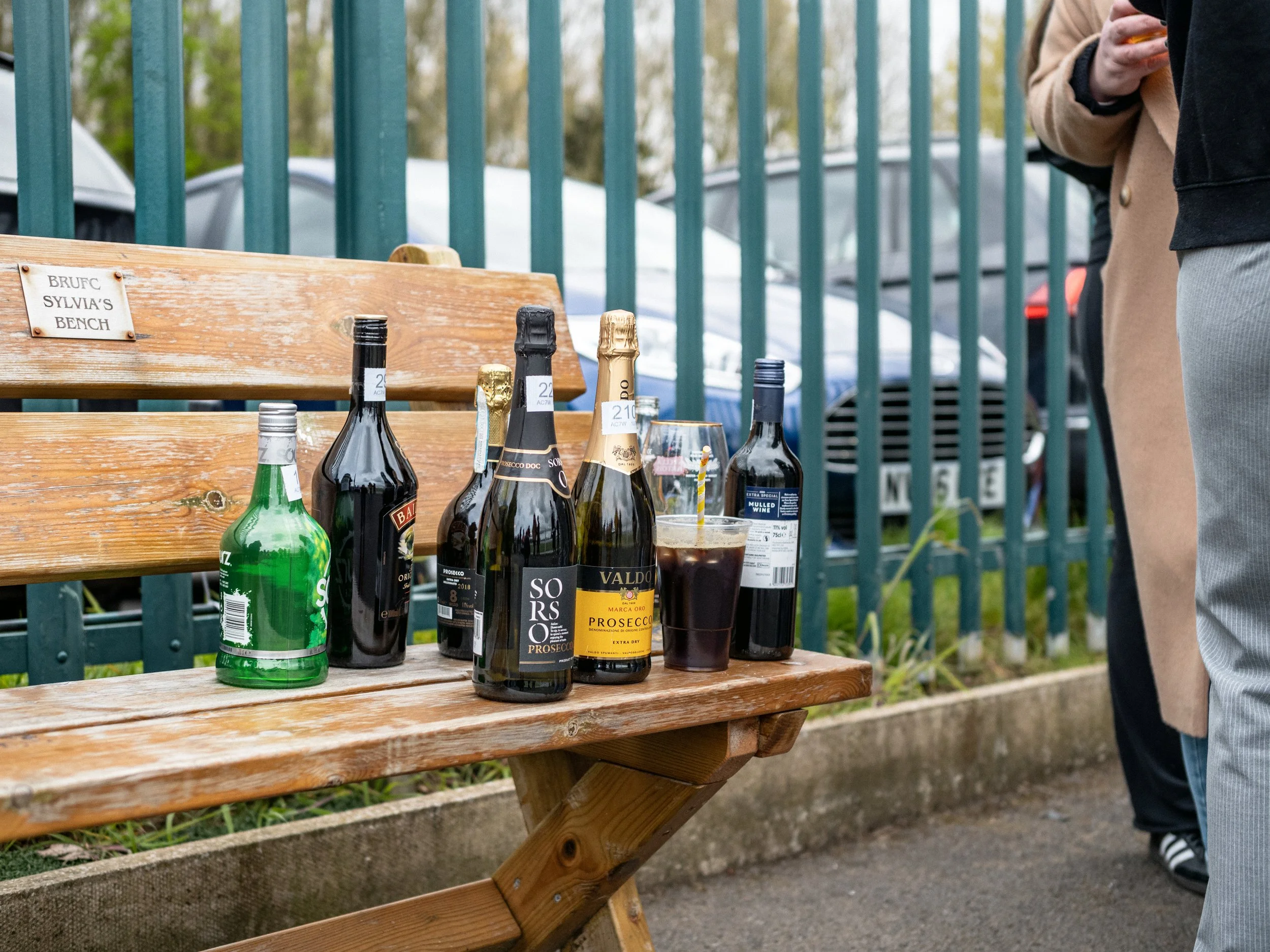
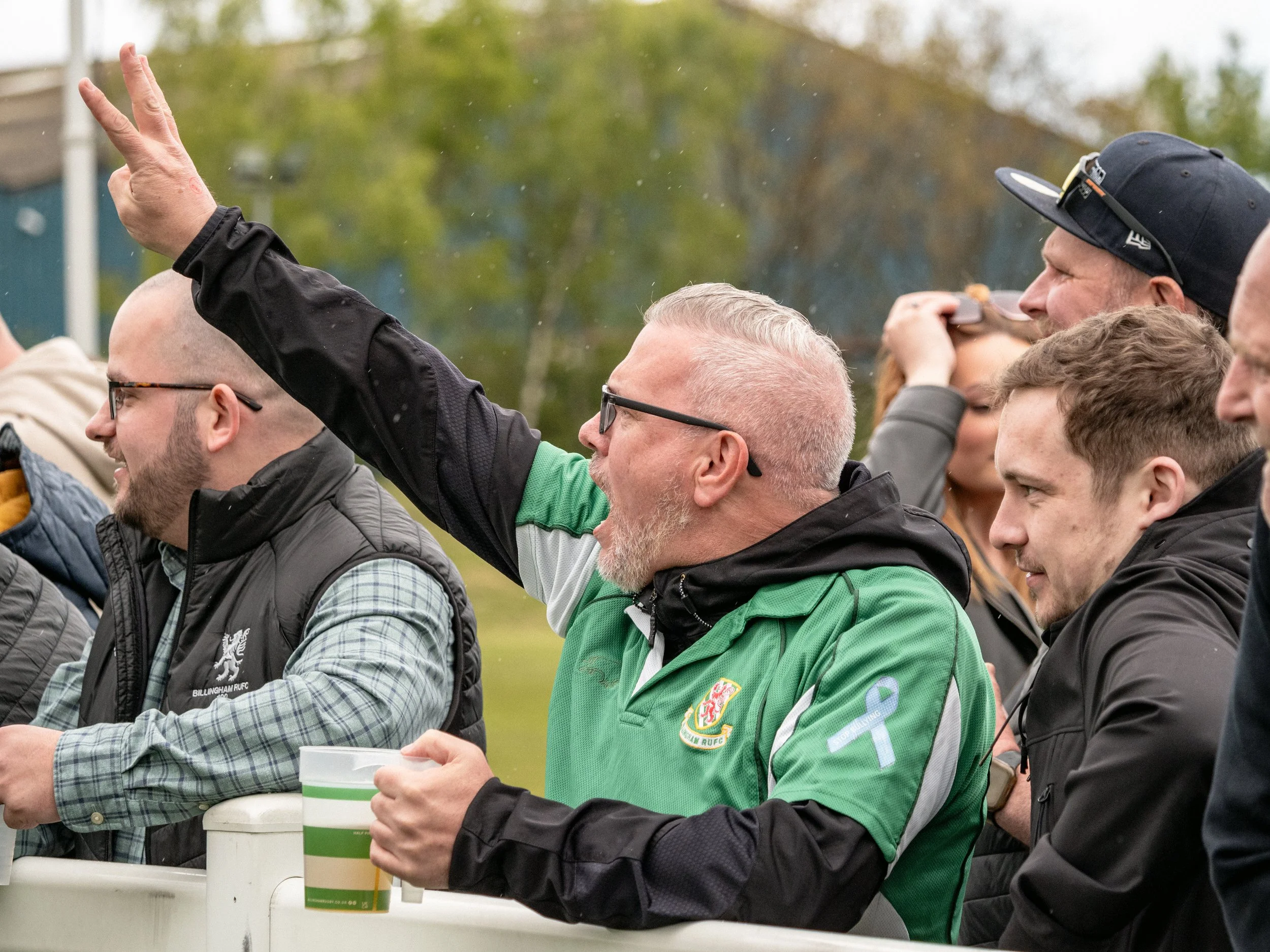
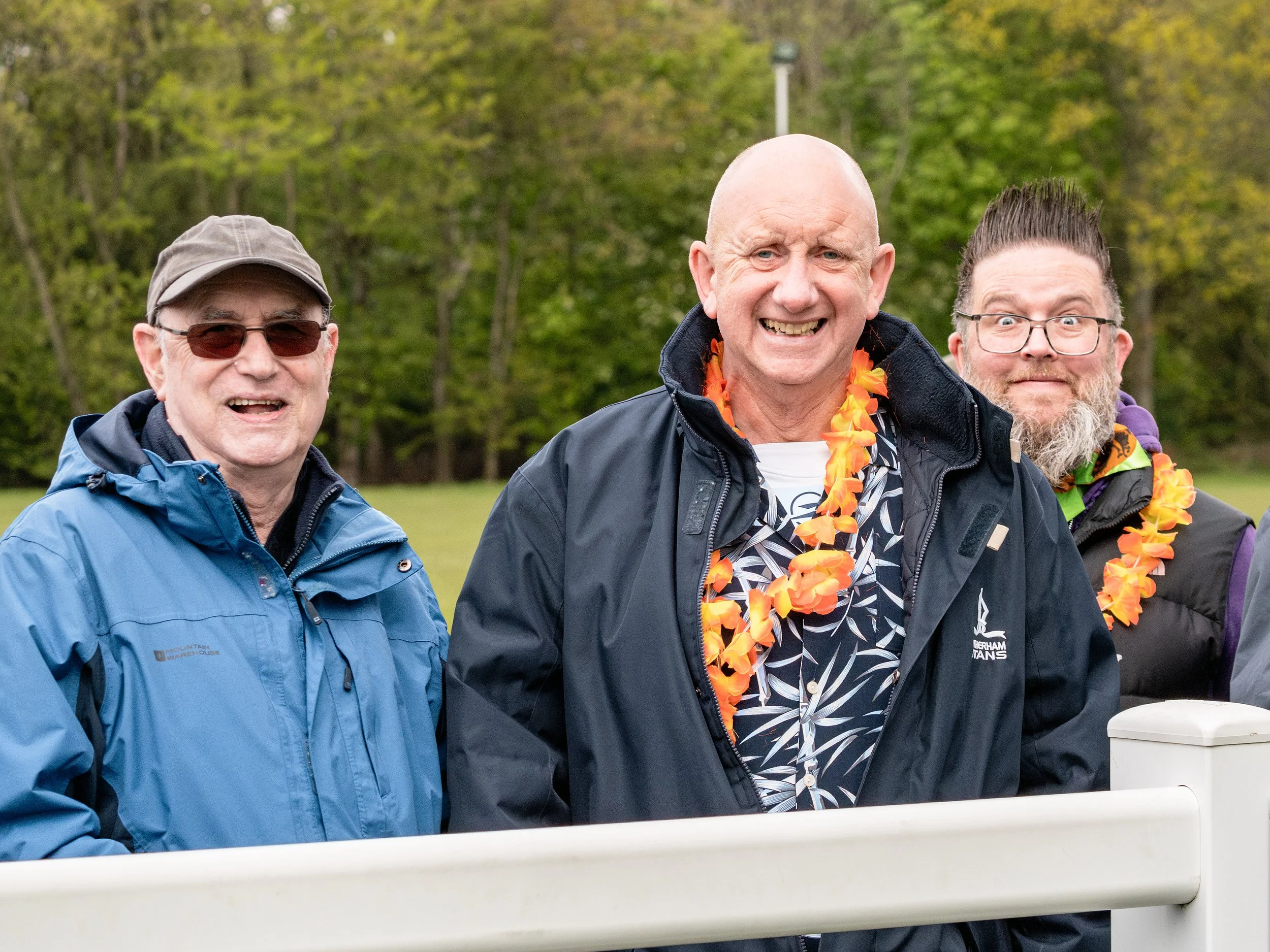
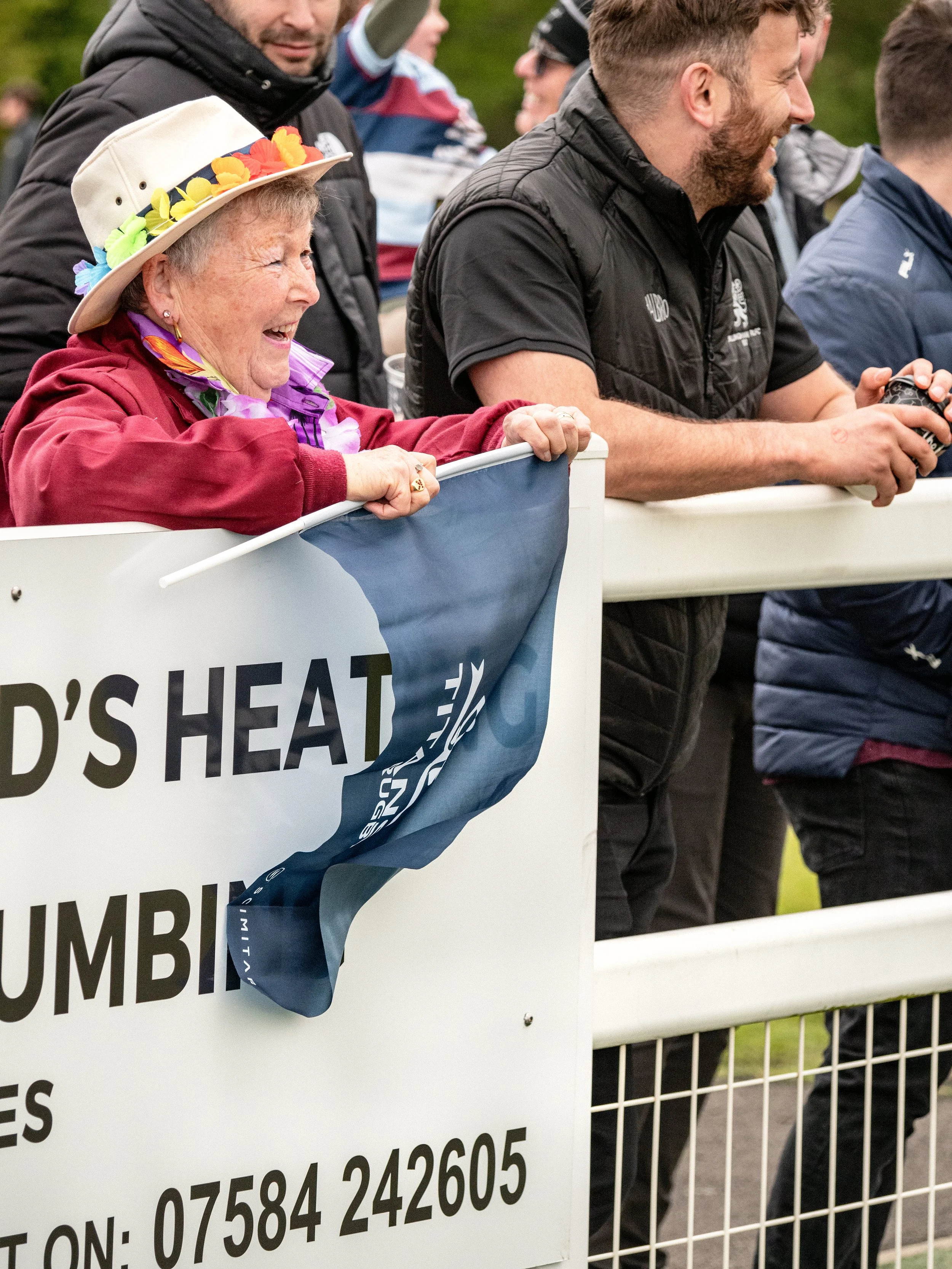
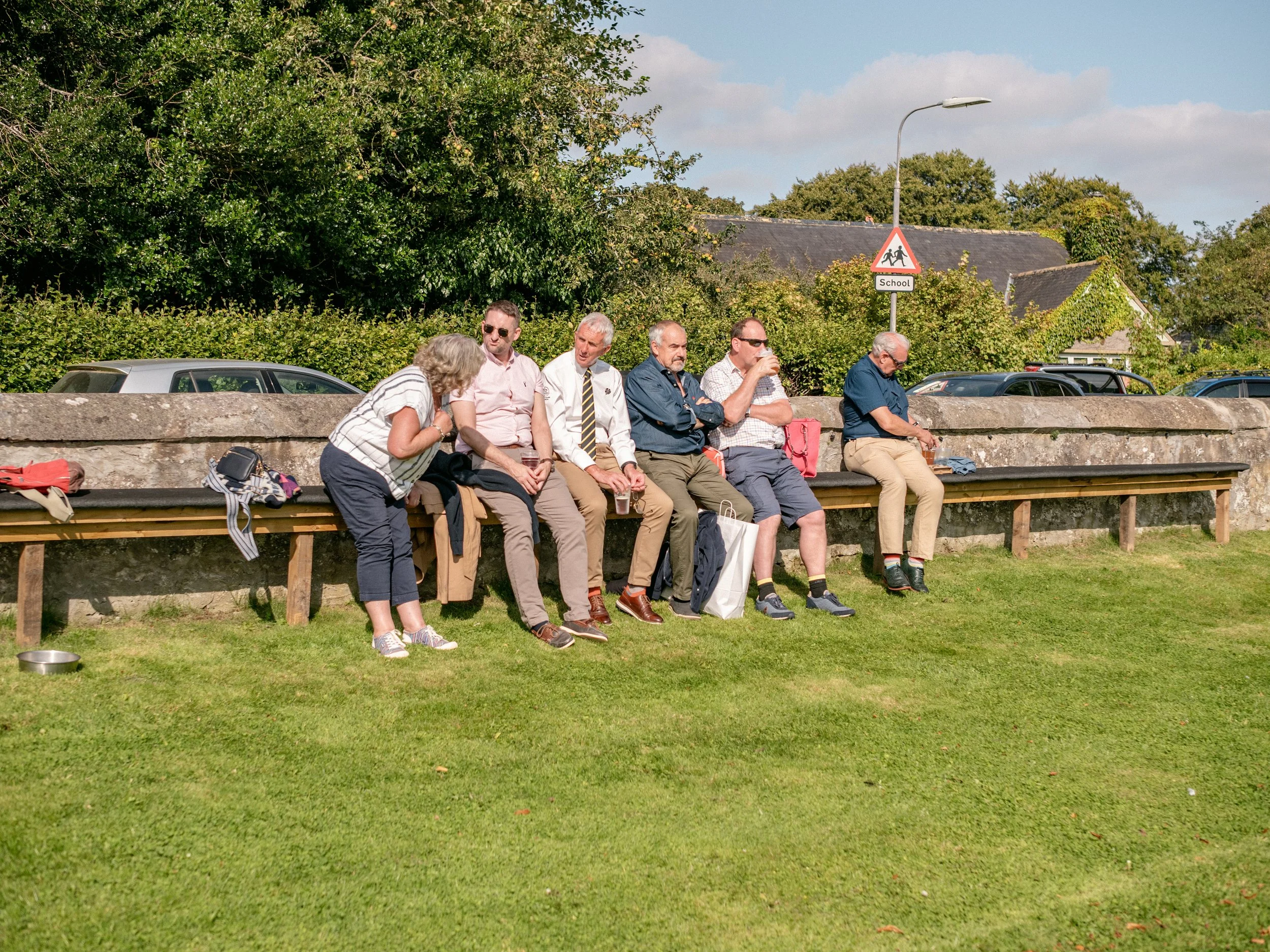
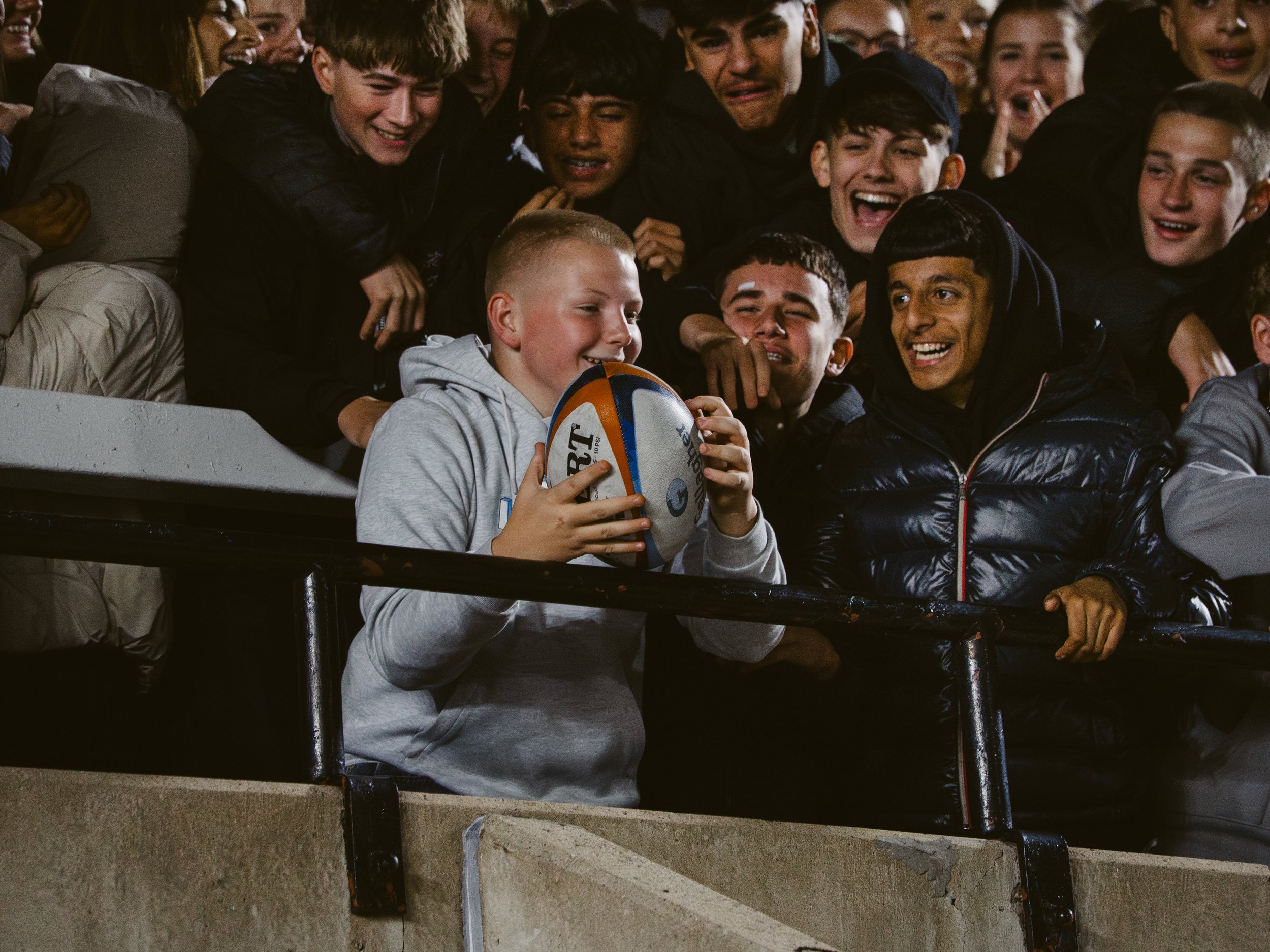
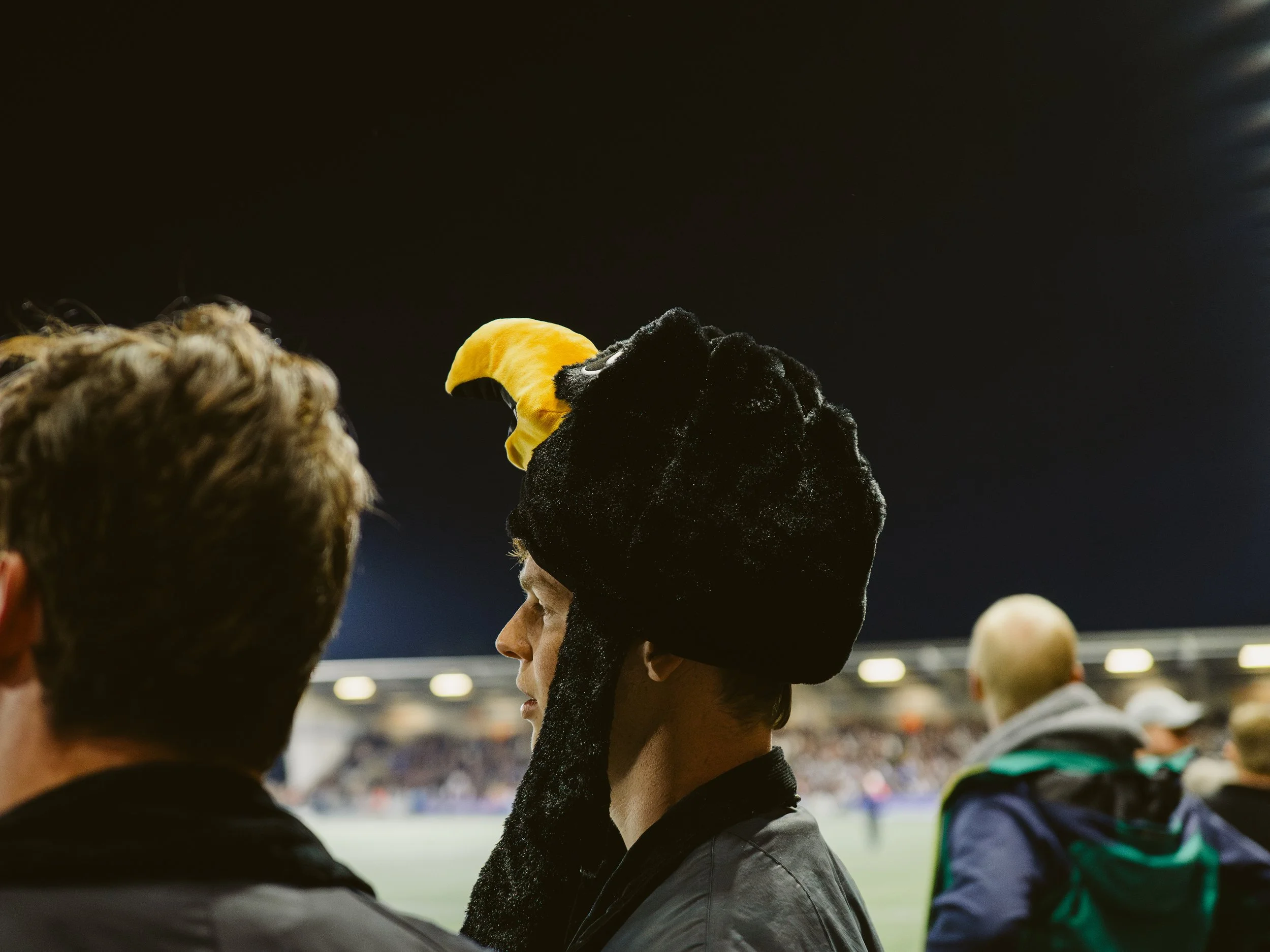
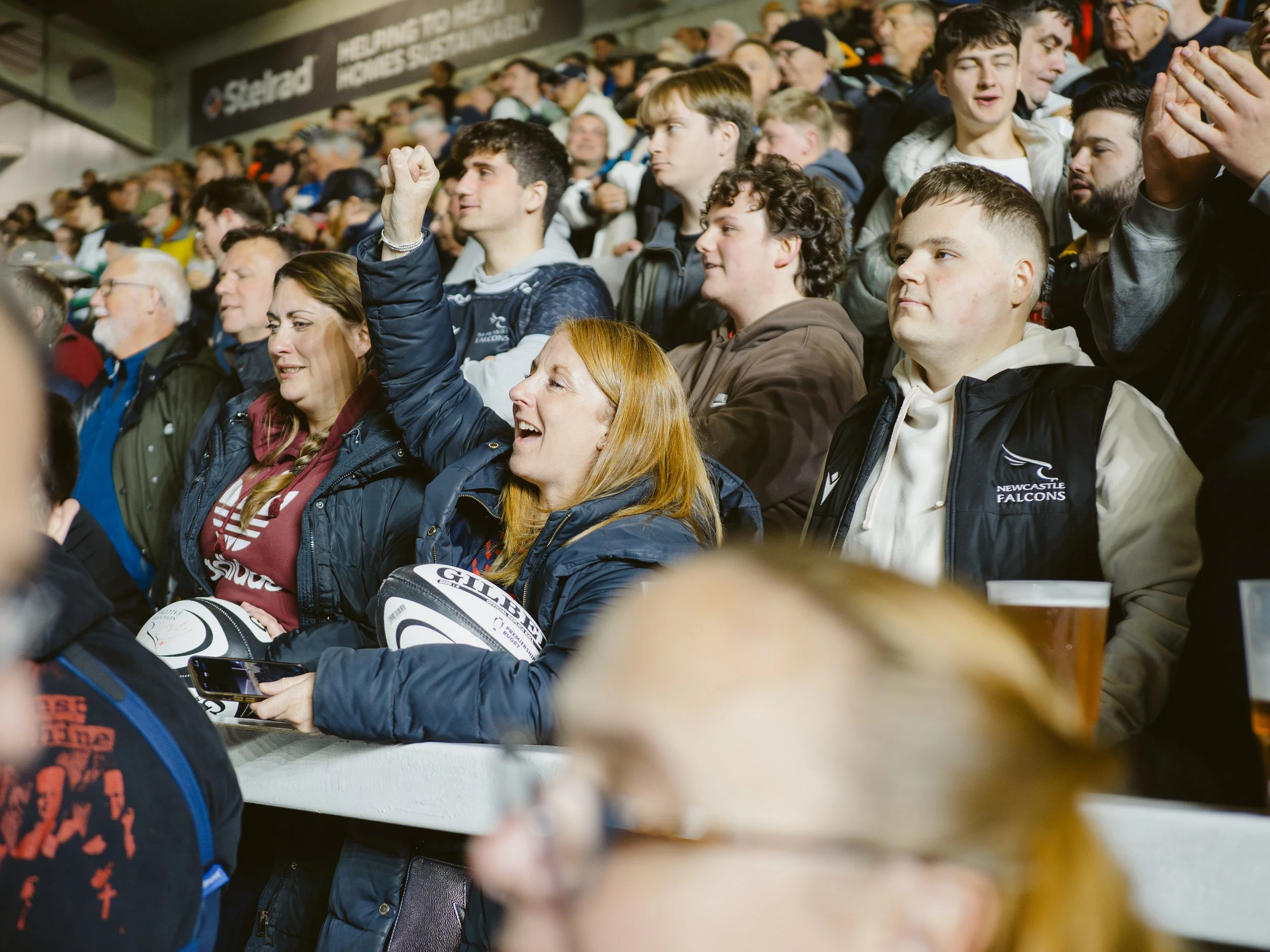
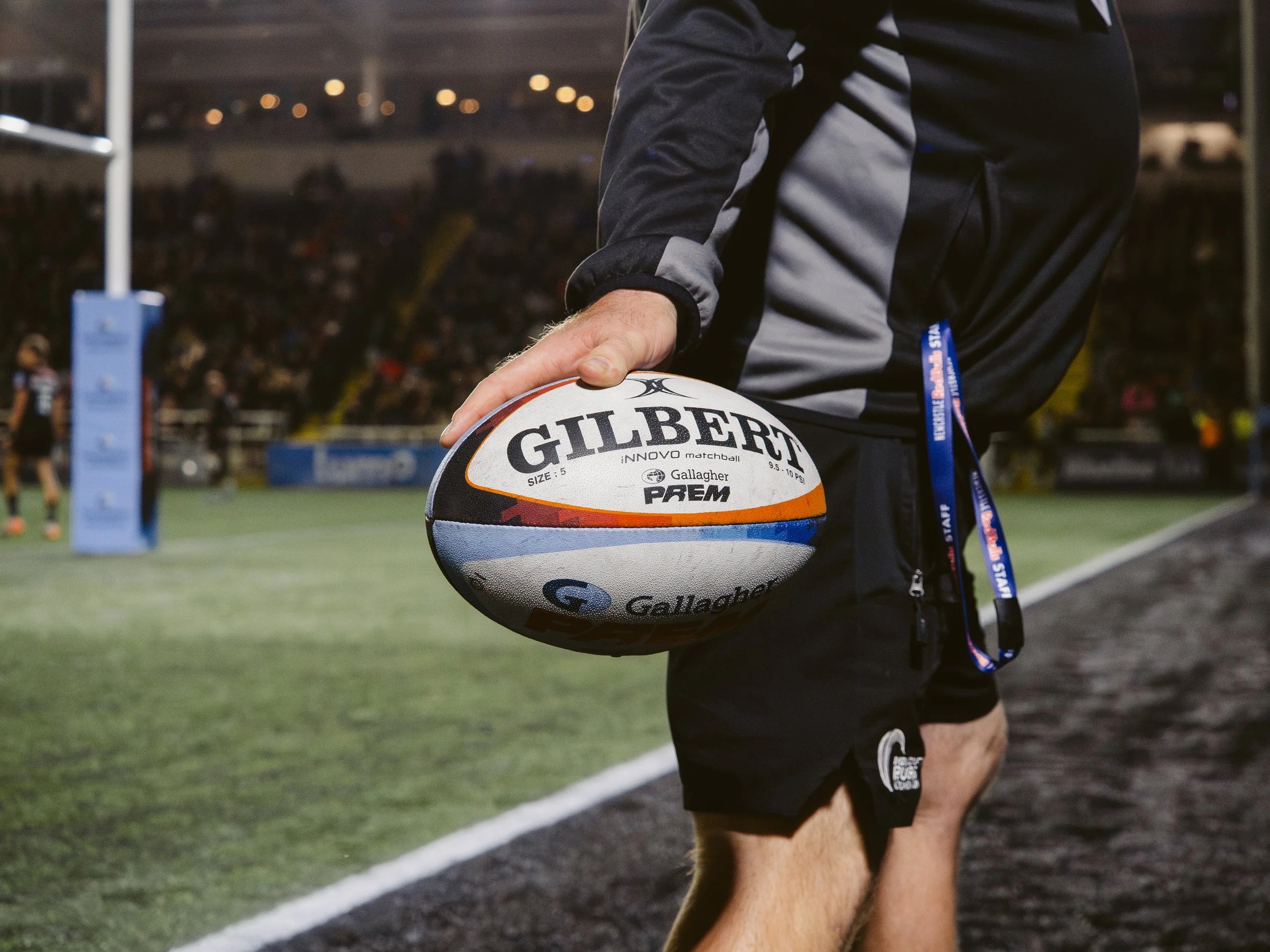
As I’m wandering around the pitch before kick-off, this is probably where my background in sociology shows up most clearly. I’m fascinated by cultures and subcultures, and not having grown up in a sporting family, I find match day completely absorbing.
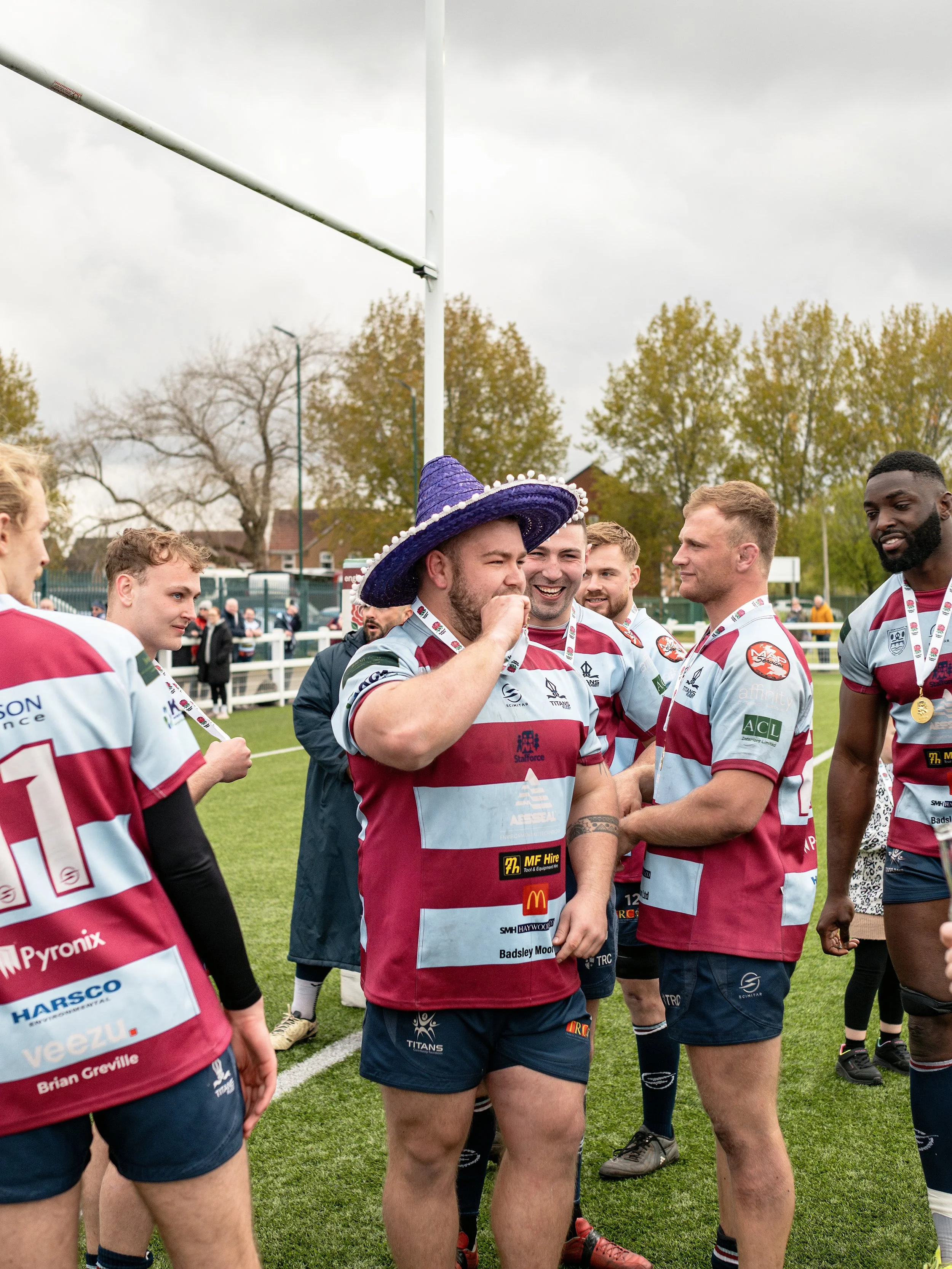
I’m looking for the details. The rituals. The emotions. The small signals of belonging.
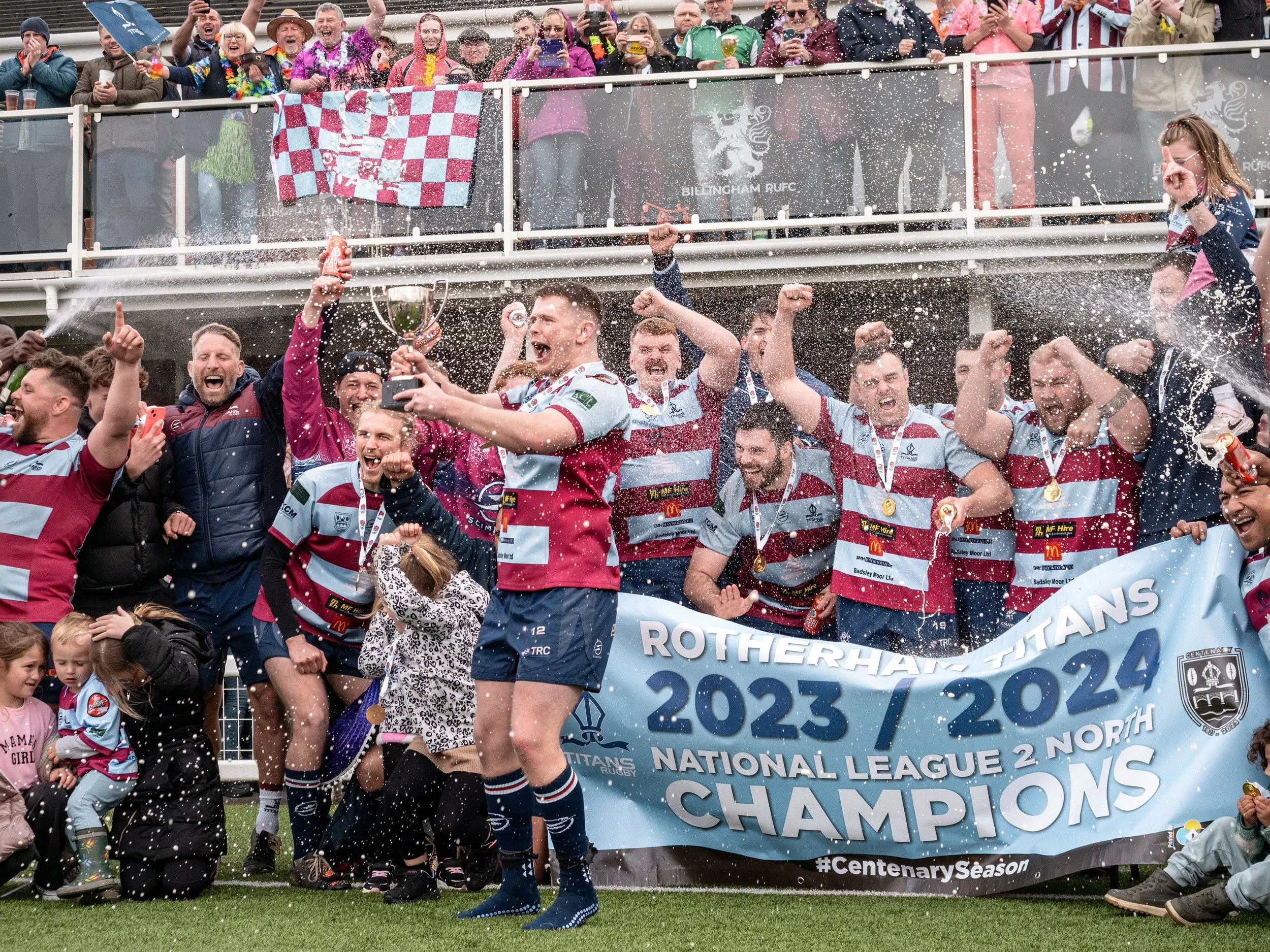
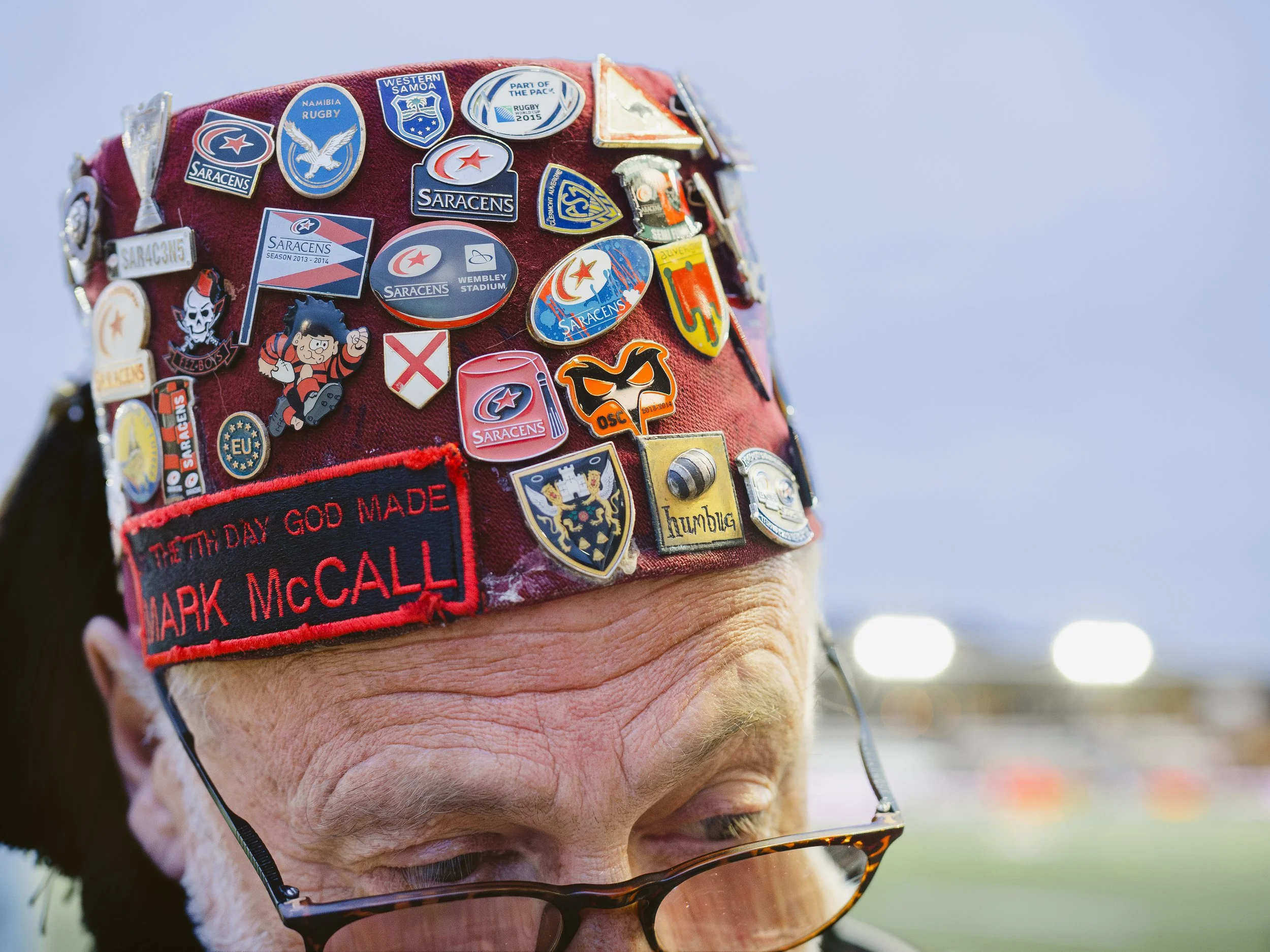
On my last shoot - which was covering a big match - I spotted a man wearing the most amazing hat I have ever seen, almost entirely covered in Saracen’s badges. His wife wore the same collection. They walked around the ground like royalty. But in reality, they were just die-hard fans. I’ve seen young children in full kit, grandparents shouting louder than anyone else and more hats, beer and questionable stadium food than you can shake a stick at.
And I capture all of it.
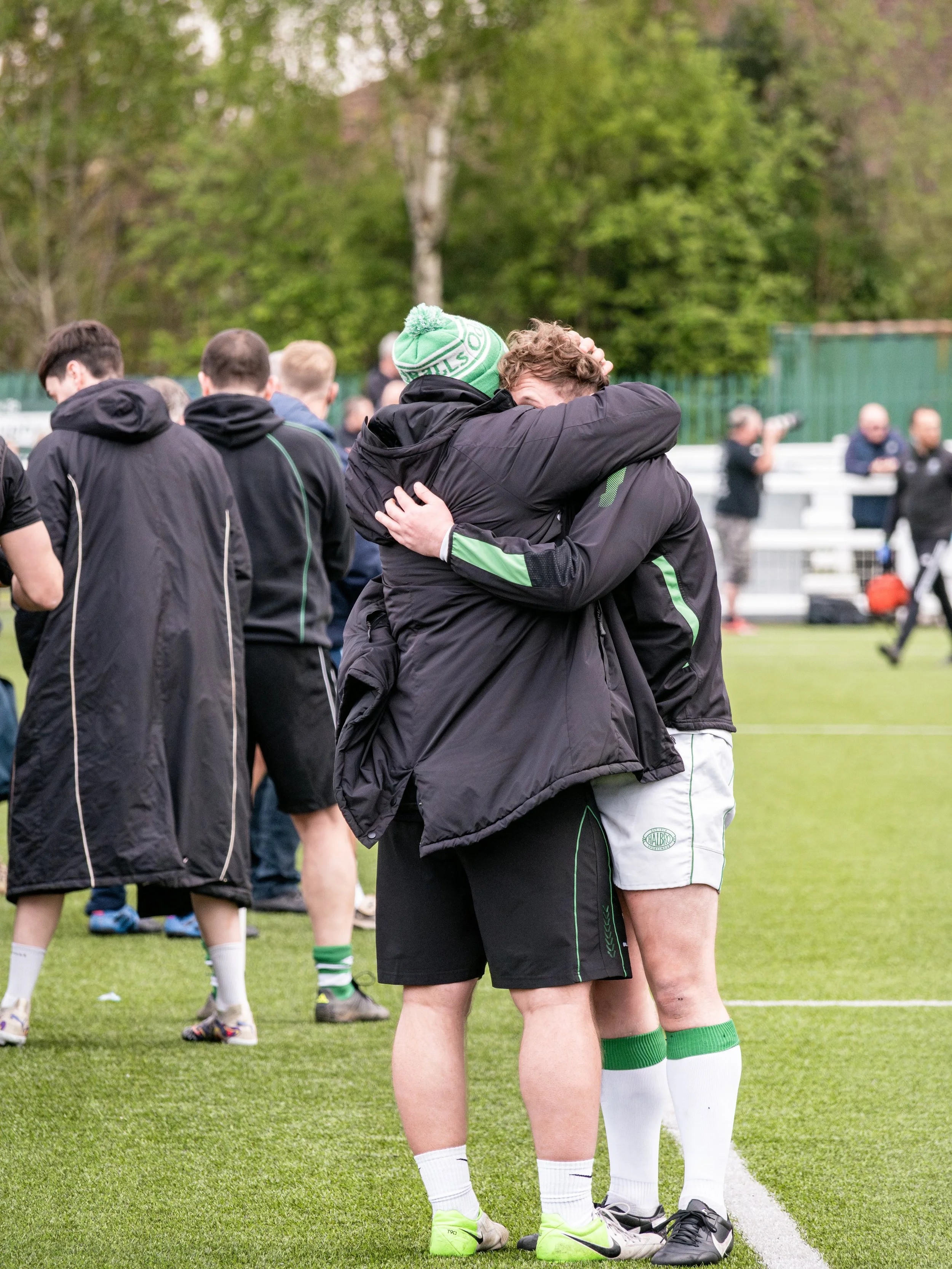
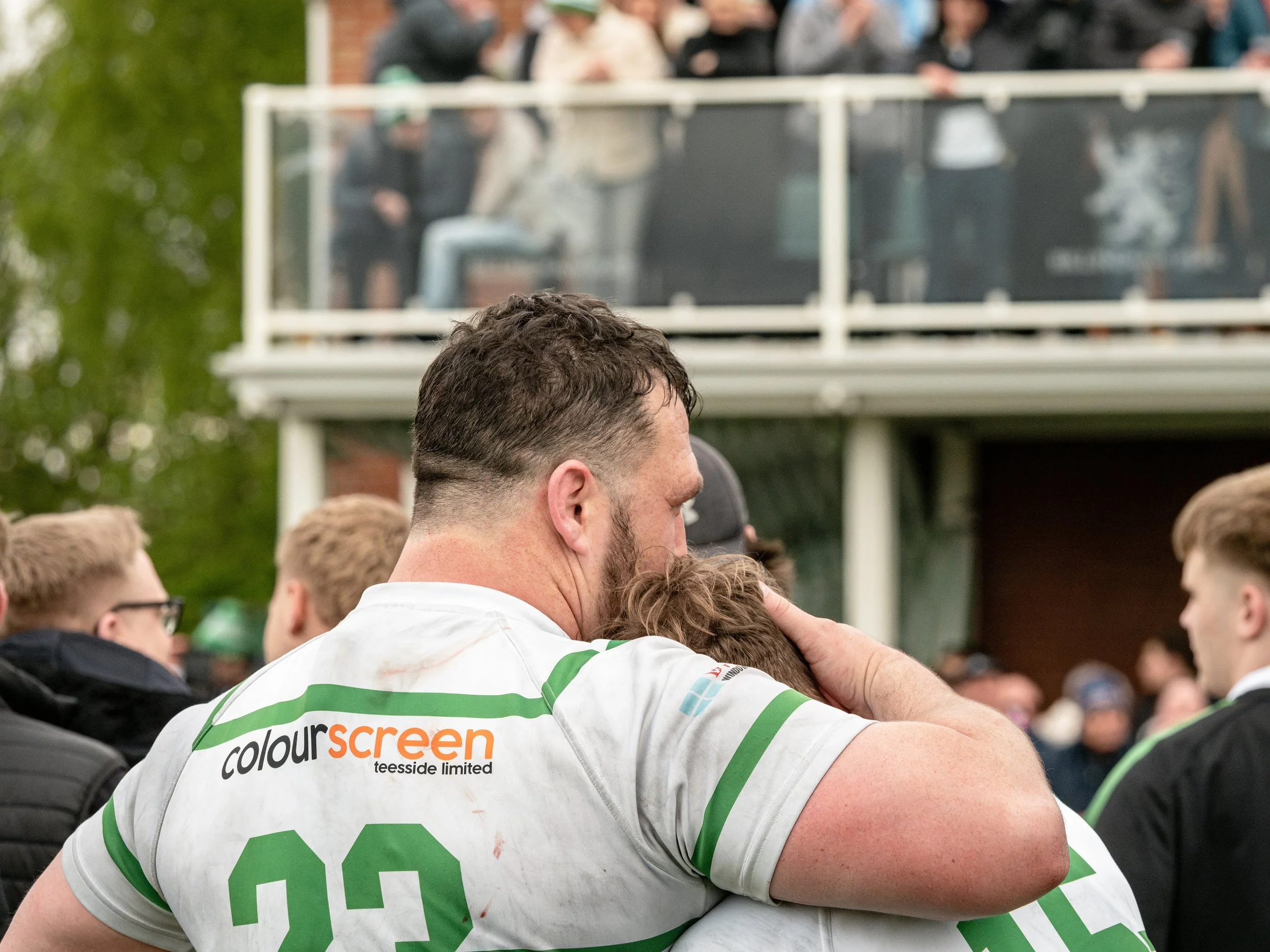
Because if I’m asked to tell the story of an event or a community, I want more than just the big hitting action shots. I want the people who make up the community, not just the star players. I want the full emotional spectrum, not just the roar when someone scores a try (see, I have picked up some rugby terminology). I want the details that build a layered narrative, not just hero moments. I want you to feel like you’re there, wrapped in your team scarf, nursing a beer, slightly deafened by the grandmother next to you.
And when it comes to the action itself? I take a slightly different approach there too.
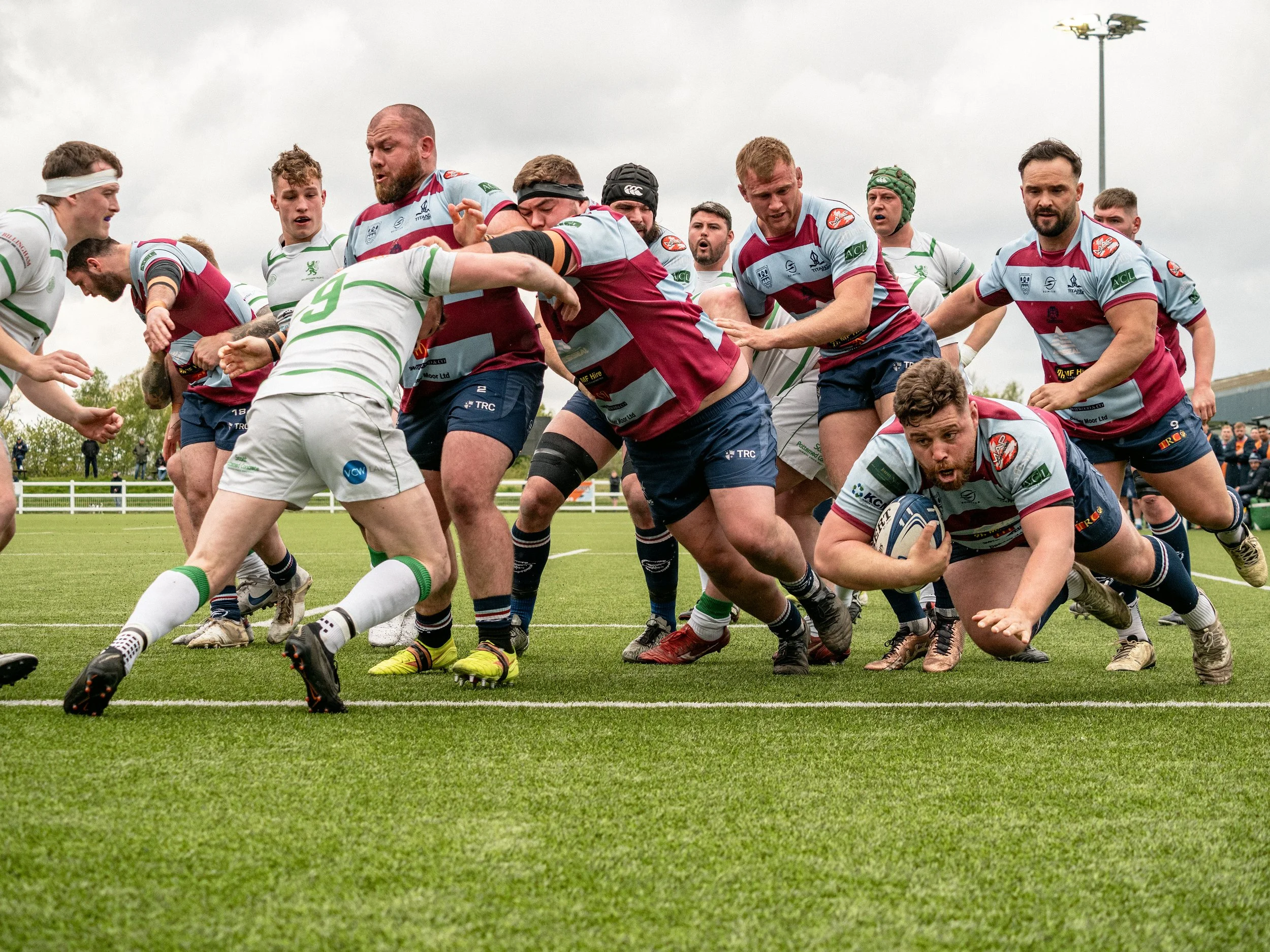
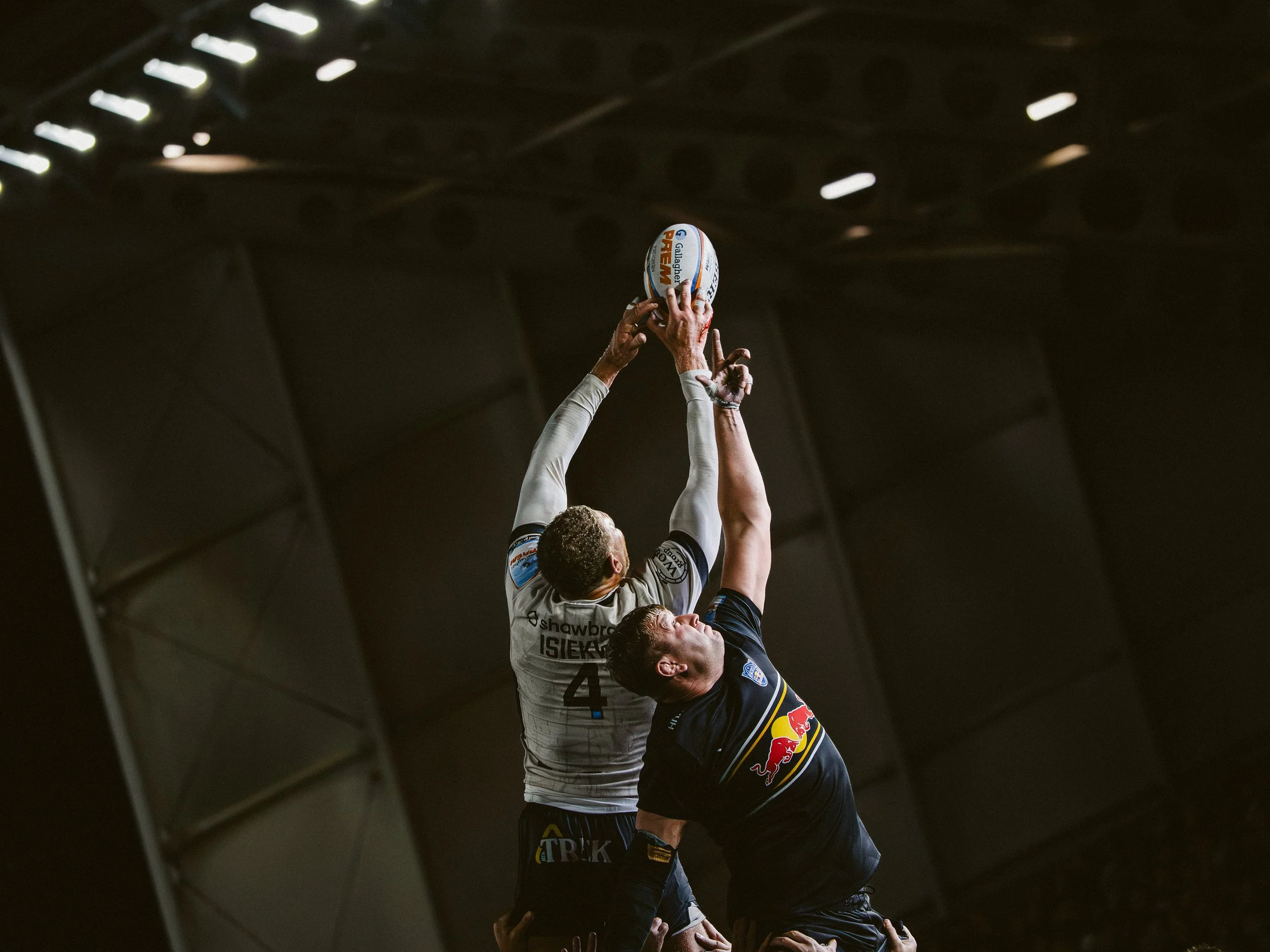
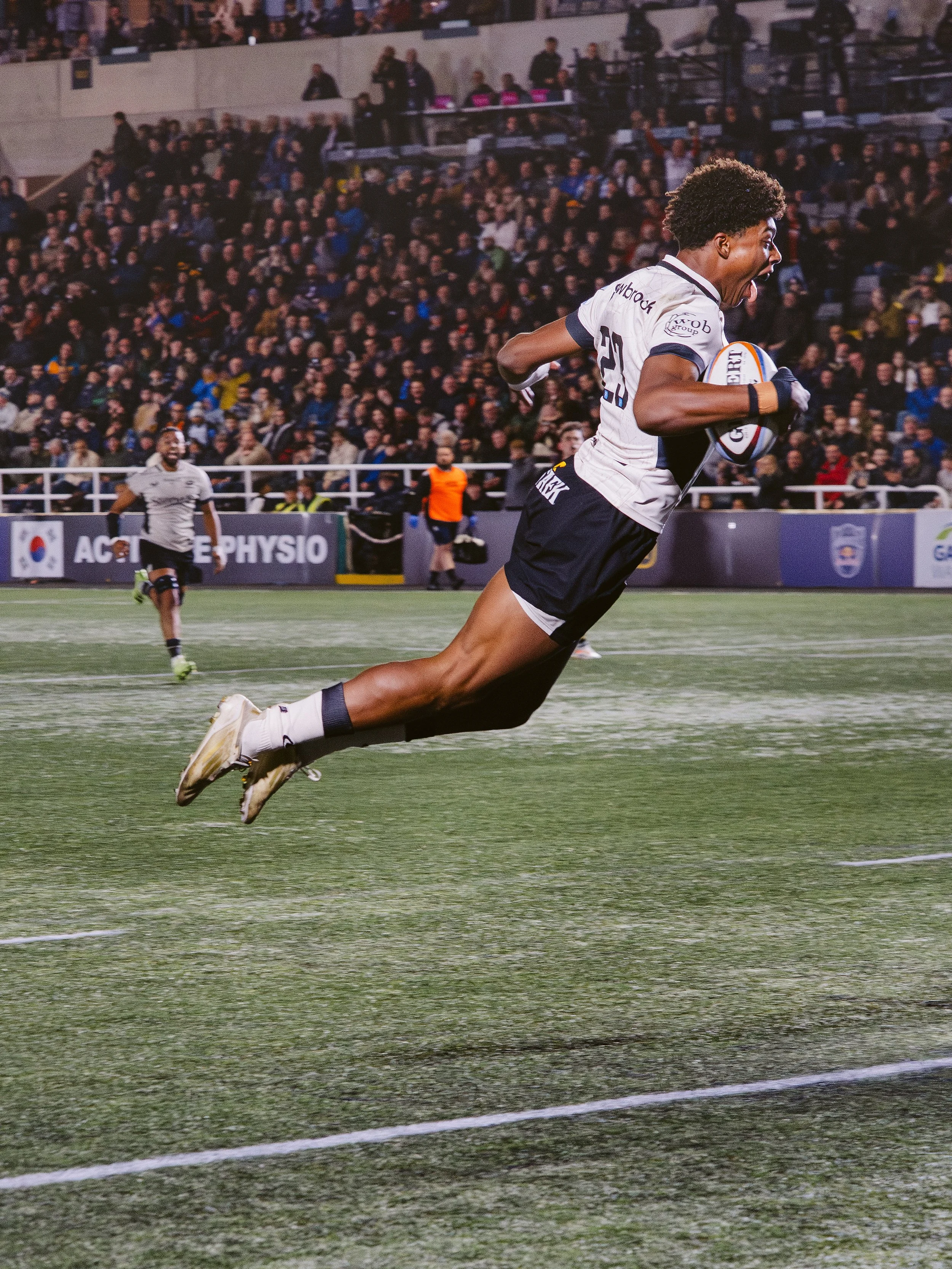
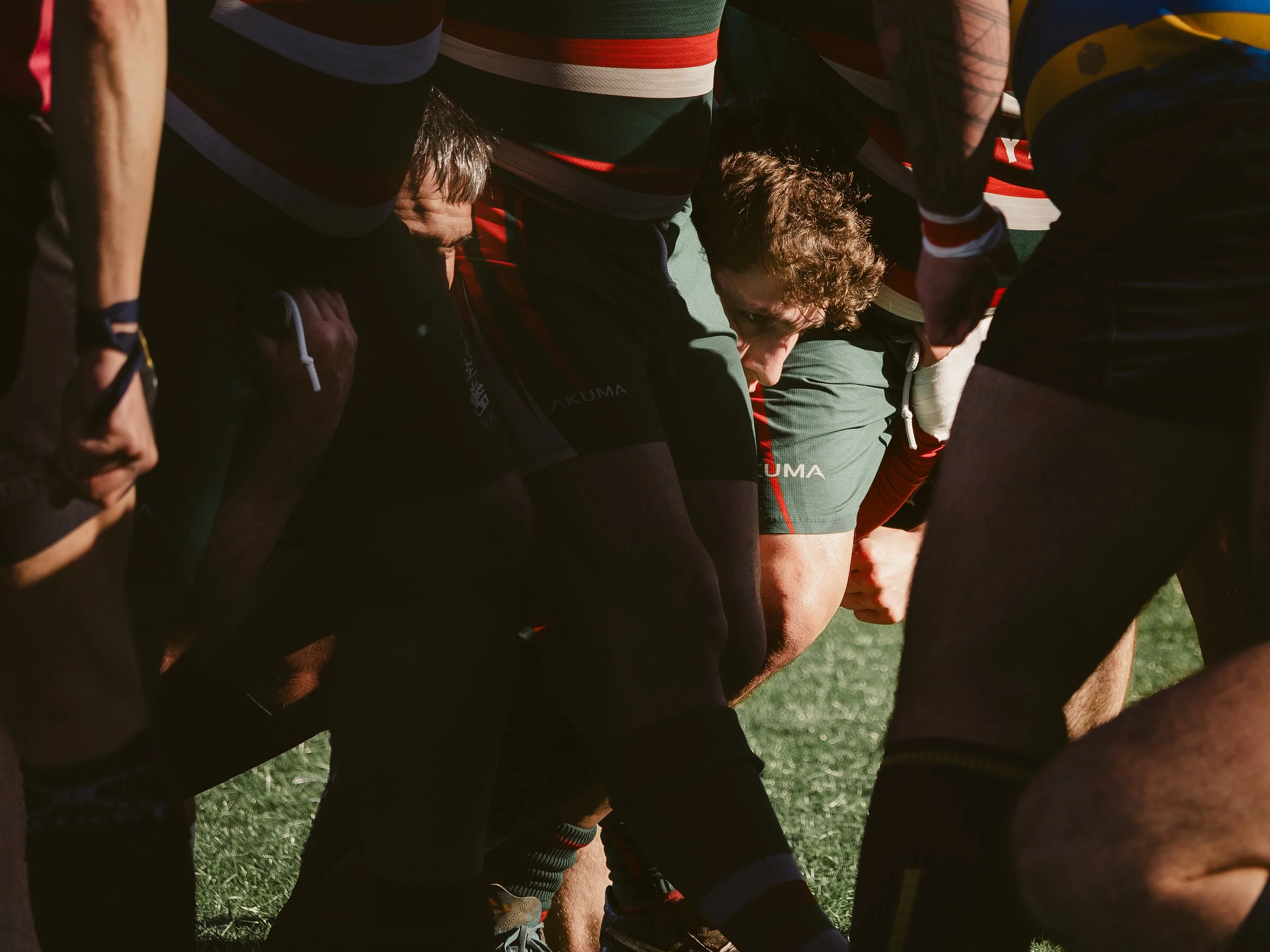
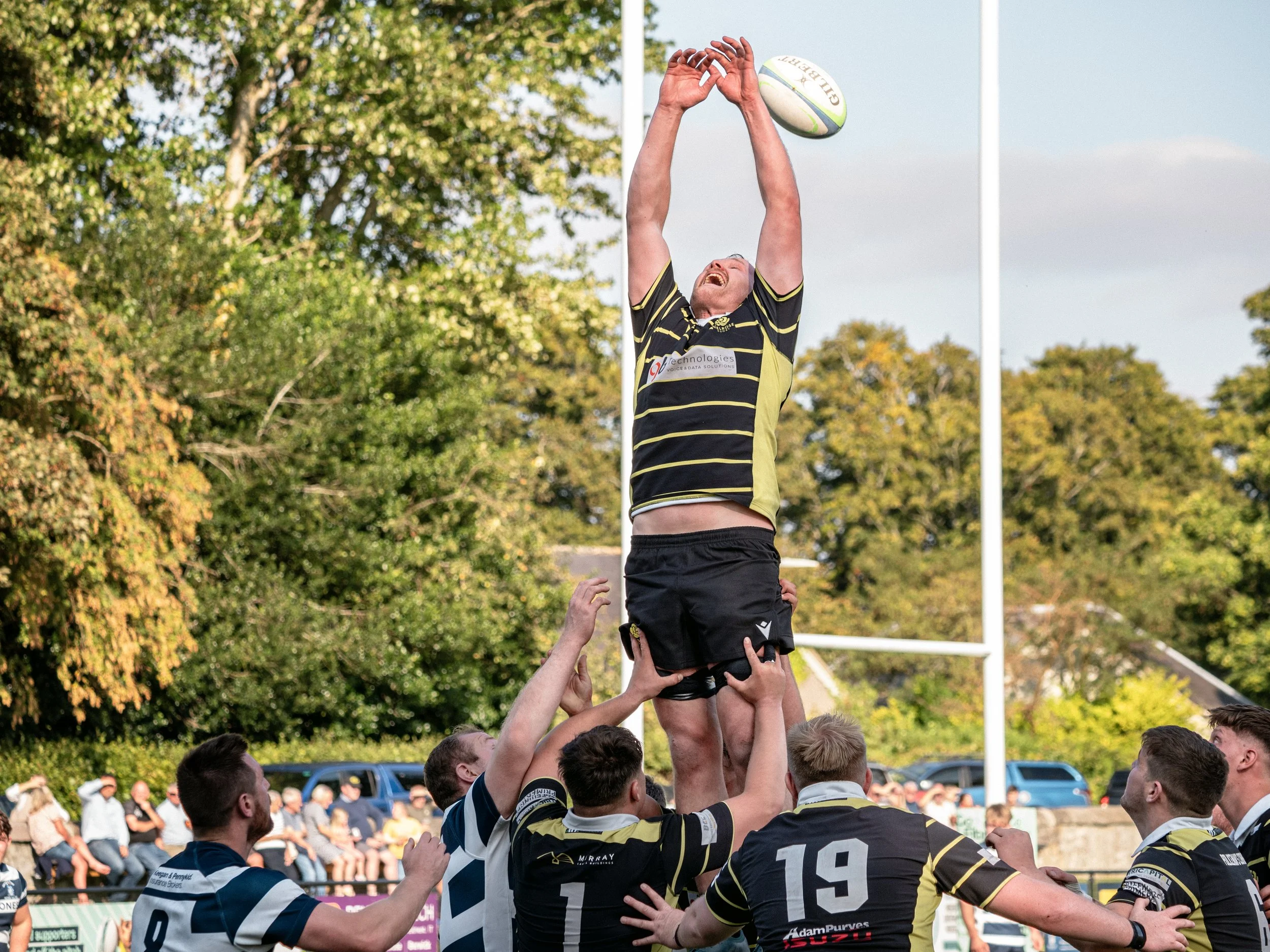
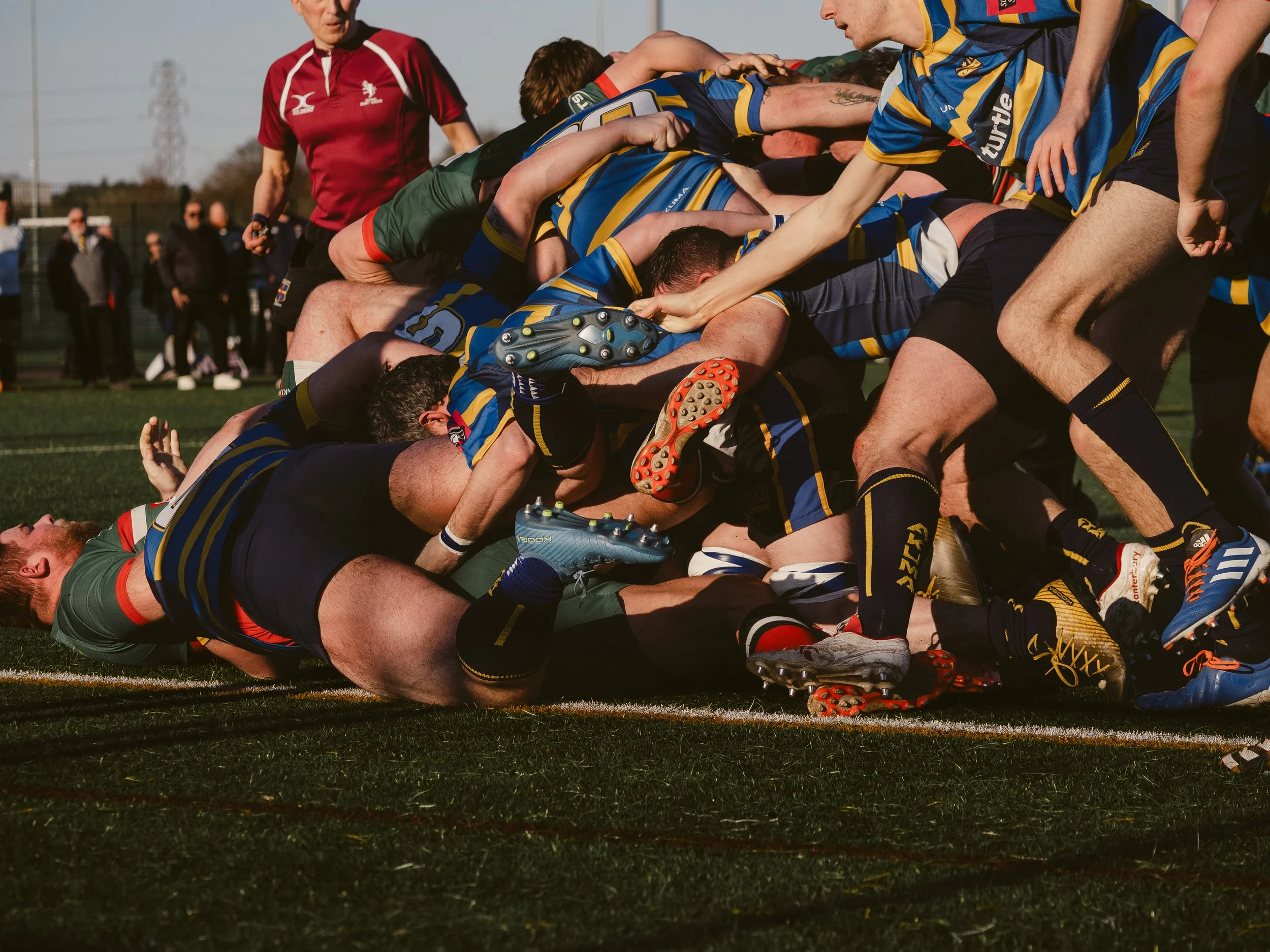
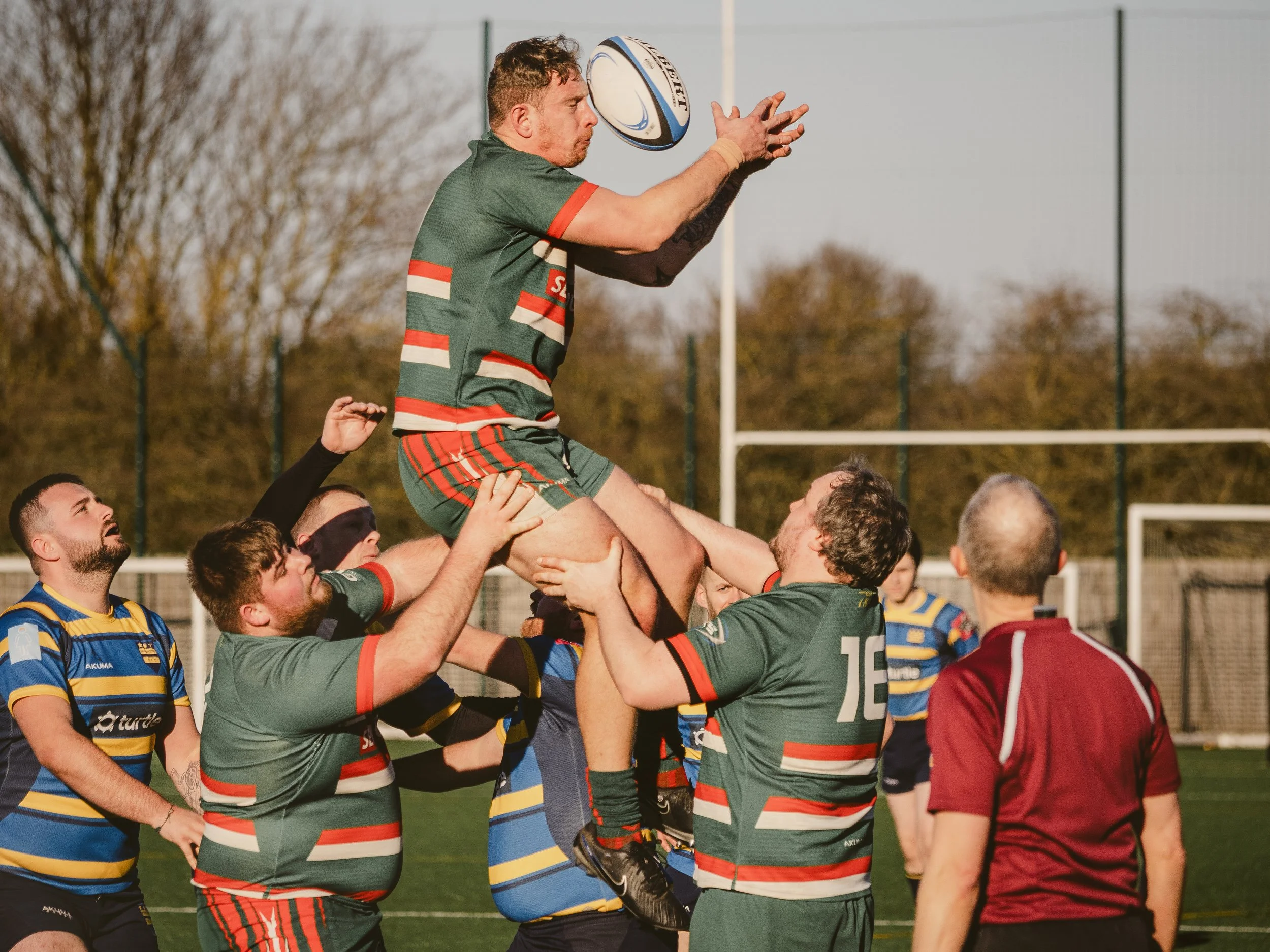
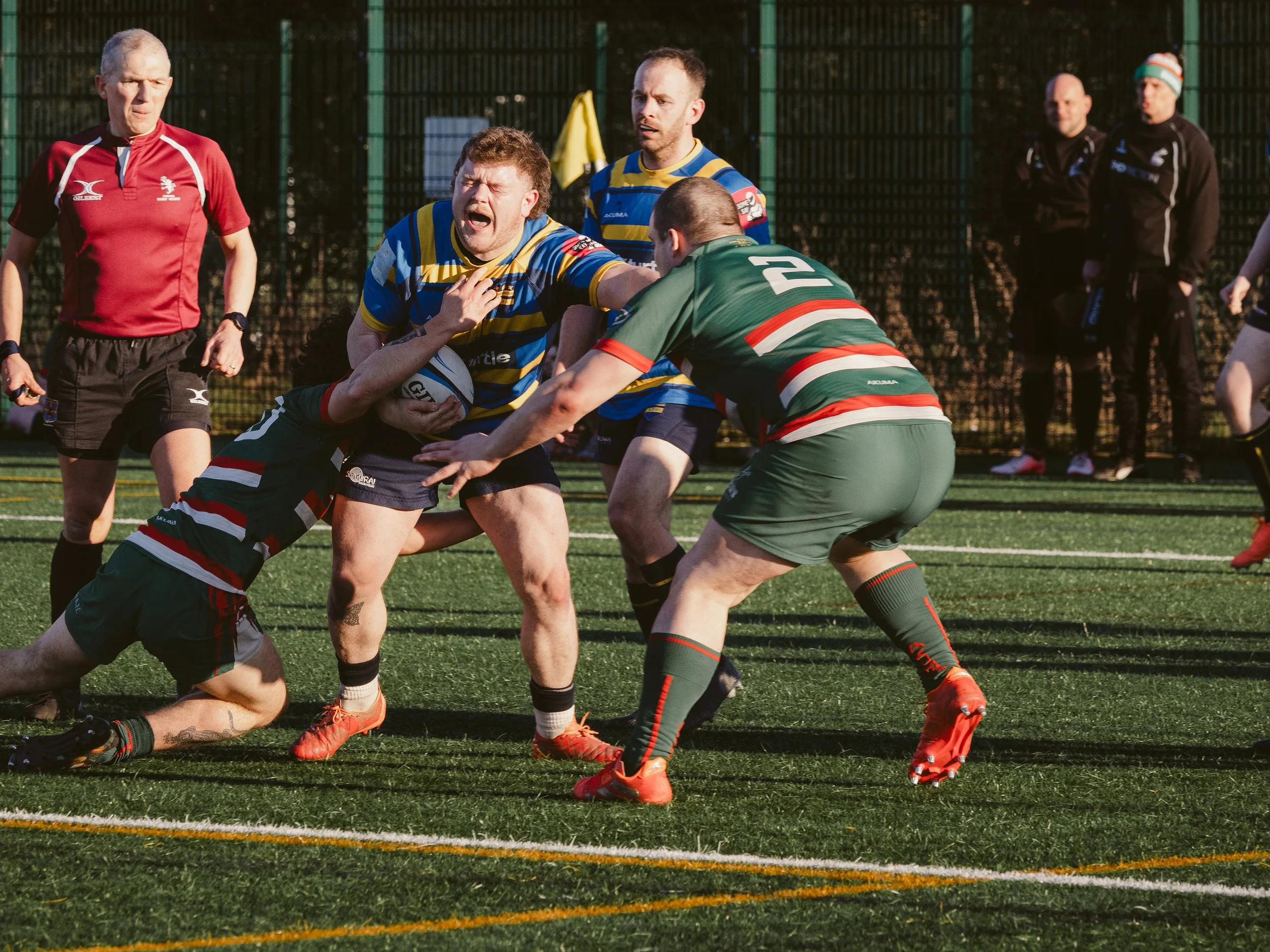
I definitely cut a different figure from many of the sports photographers on the sidelines. I don’t bring a stool. I don’t have a massive lens. And I’m not a man.
If the game allows, I move. I walk up and down the sidelines rather than staying rooted to one spot. It means I can respond more fluidly - getting closer to certain moments and turning quickly to catch the crowd’s reaction.
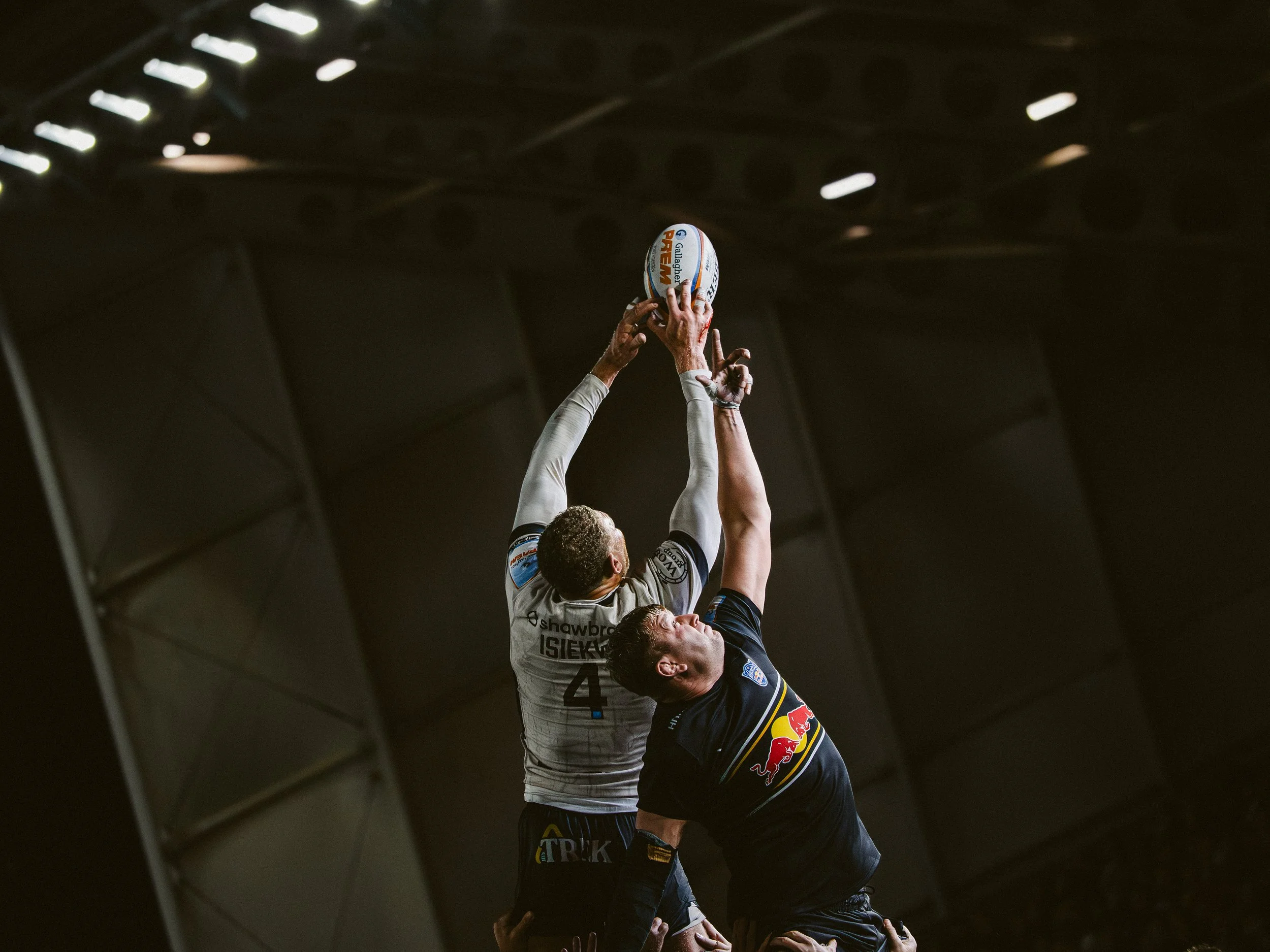
I also have a background in architecture and design, and that influence shows up constantly in my work, on the pitch and on every shoot I’m on. I’m drawn to strong lines - especially verticals - and to negative space. I like playing with composition in ways that might not be typical for sports coverage.
Sometimes I leave the action out of the frame entirely.
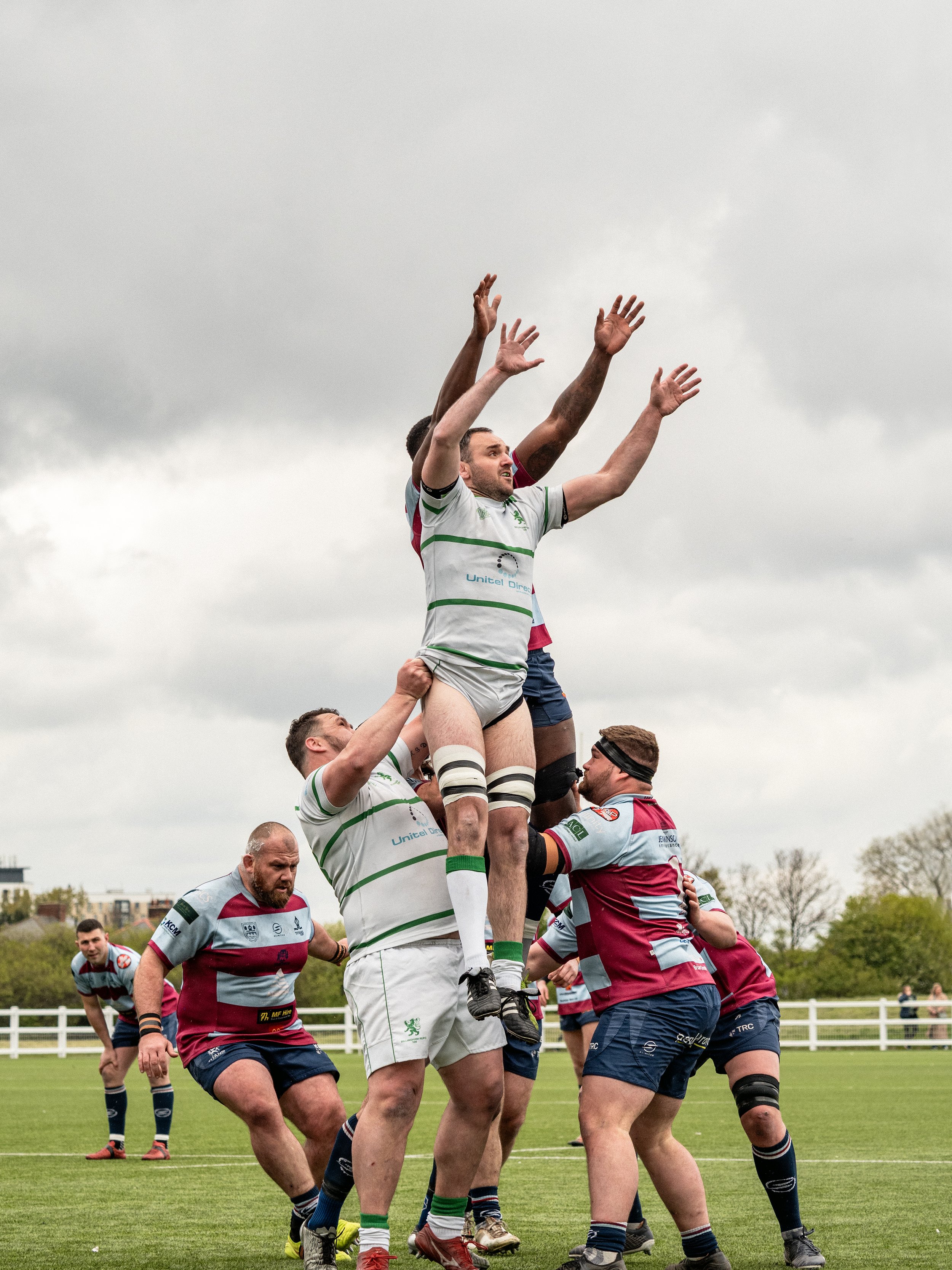
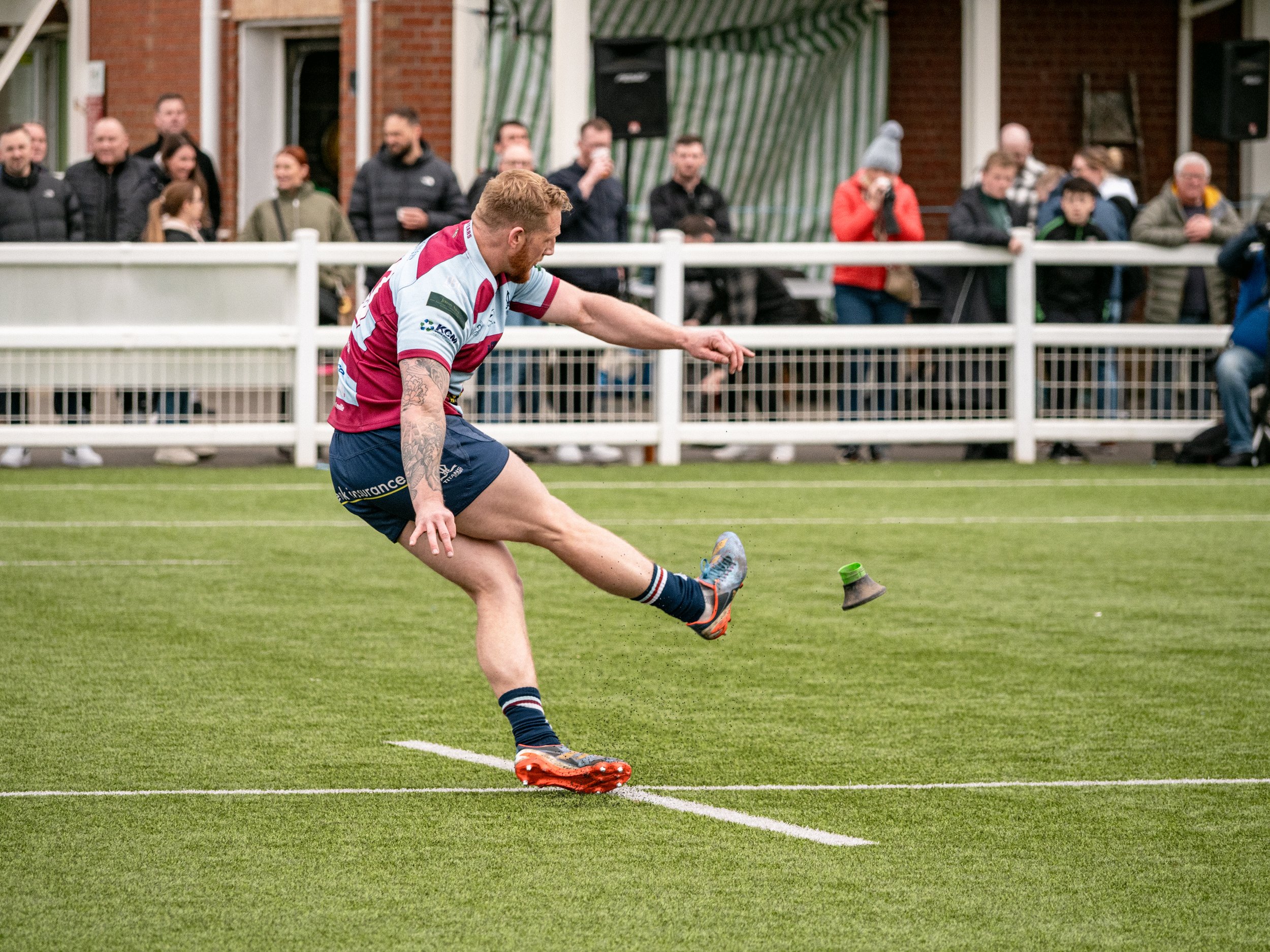
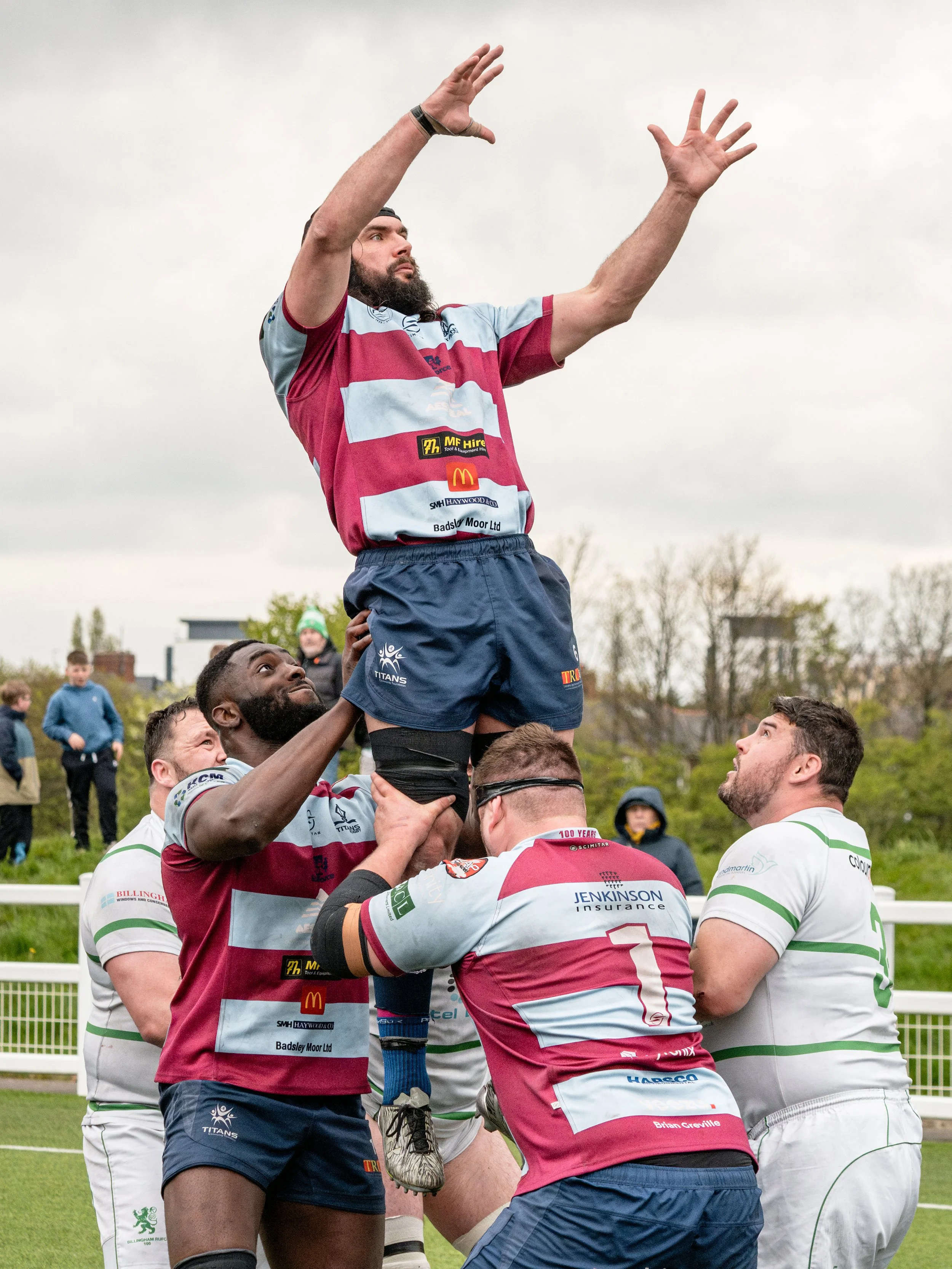
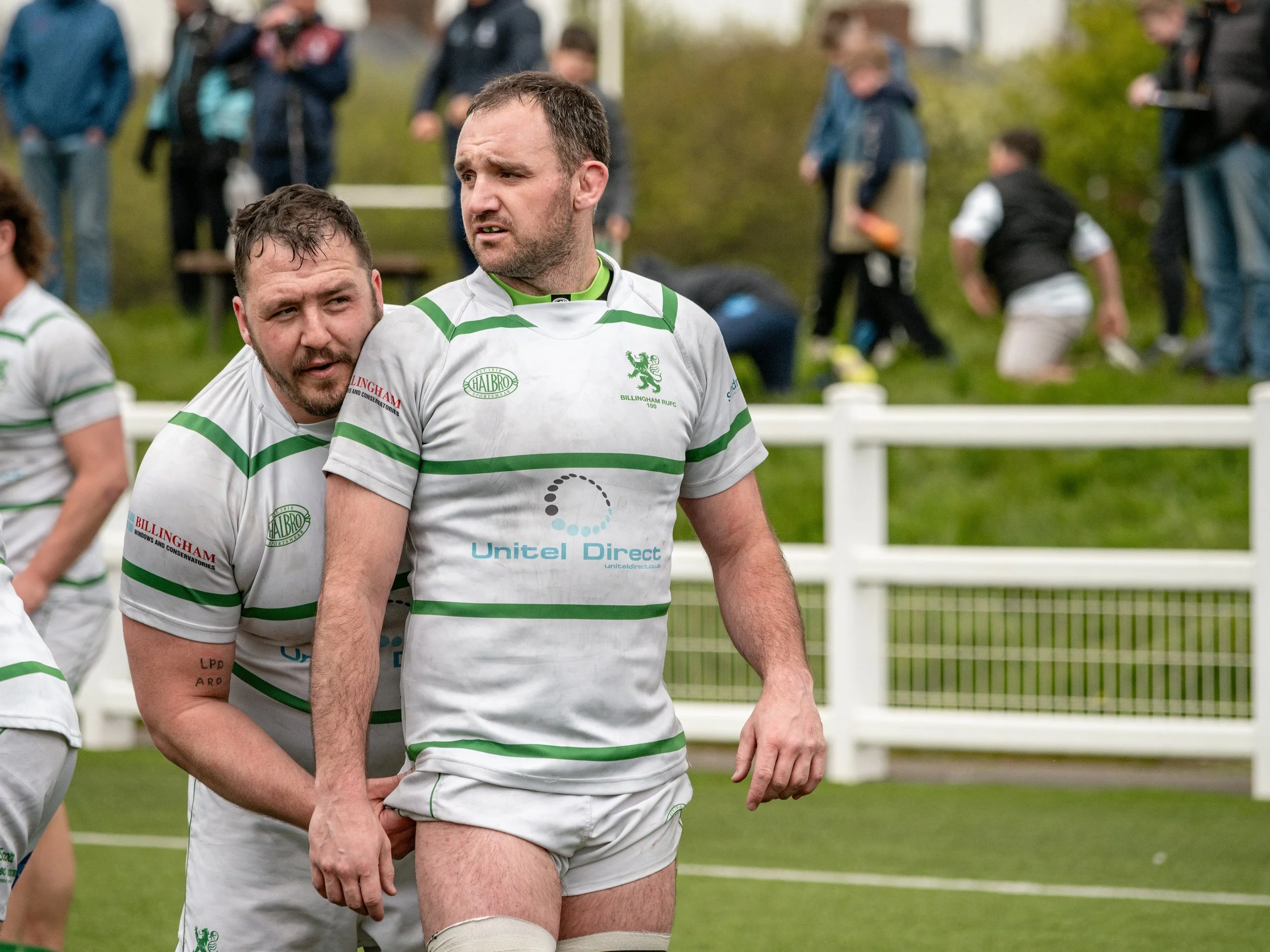
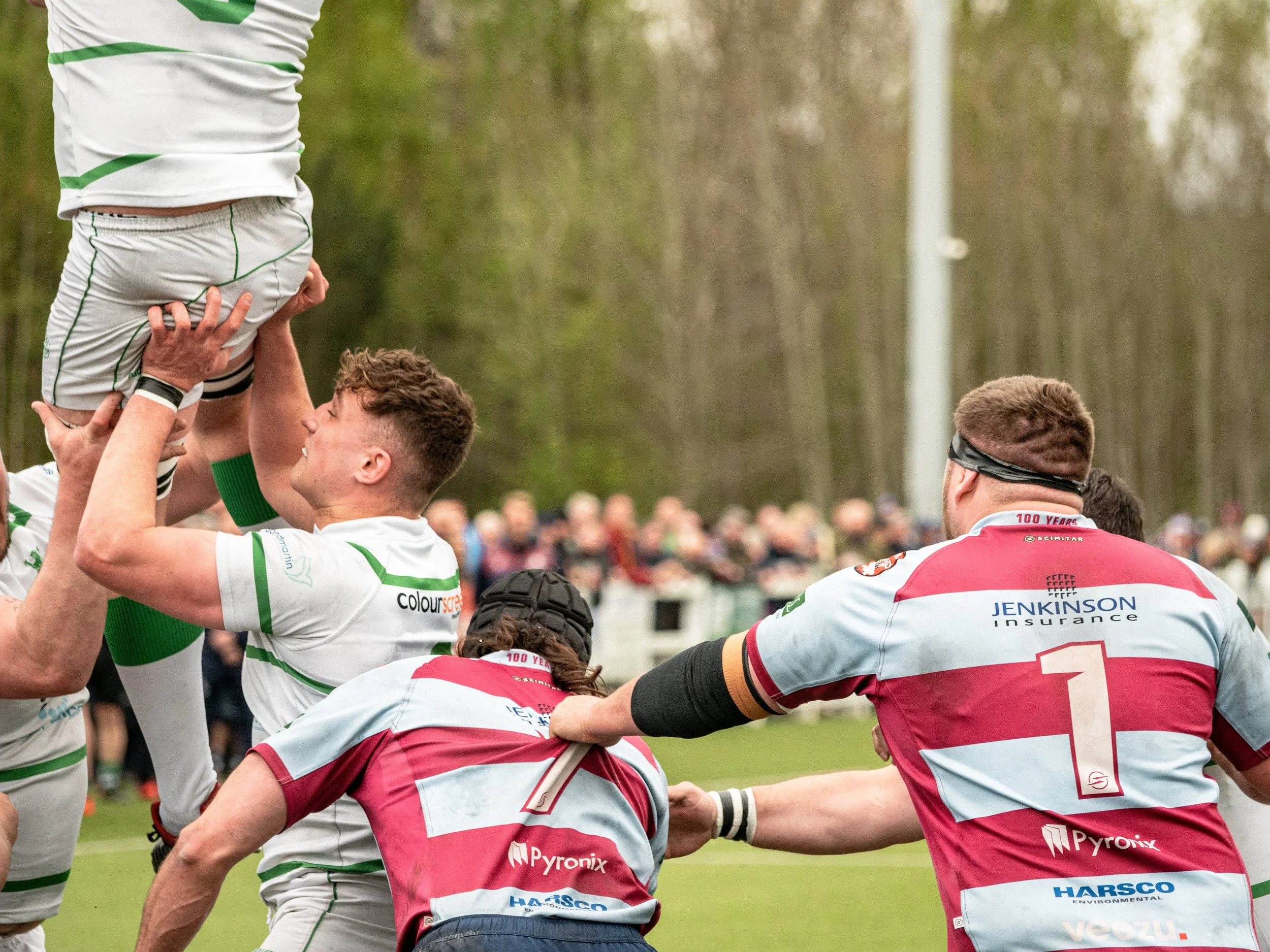
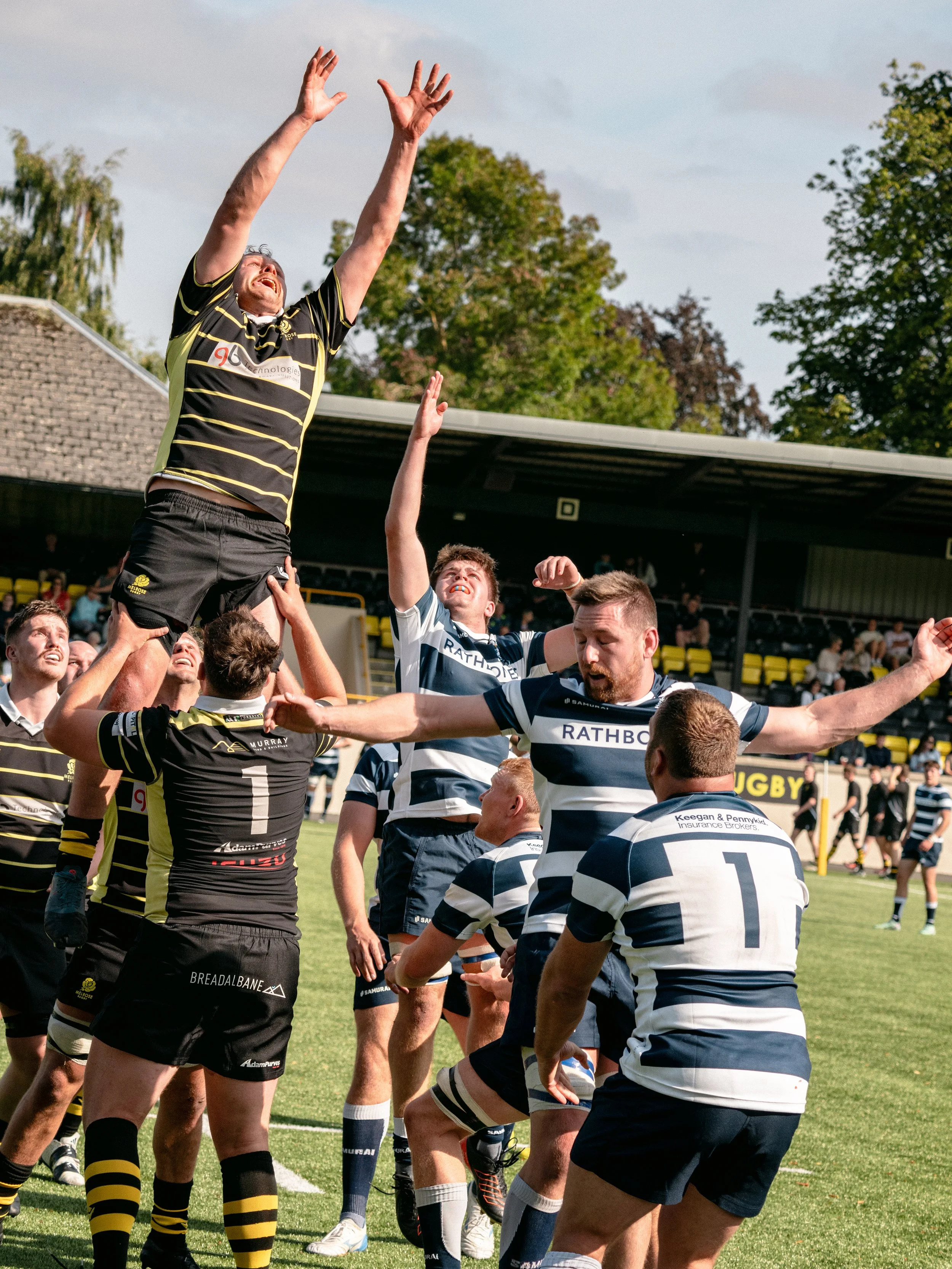
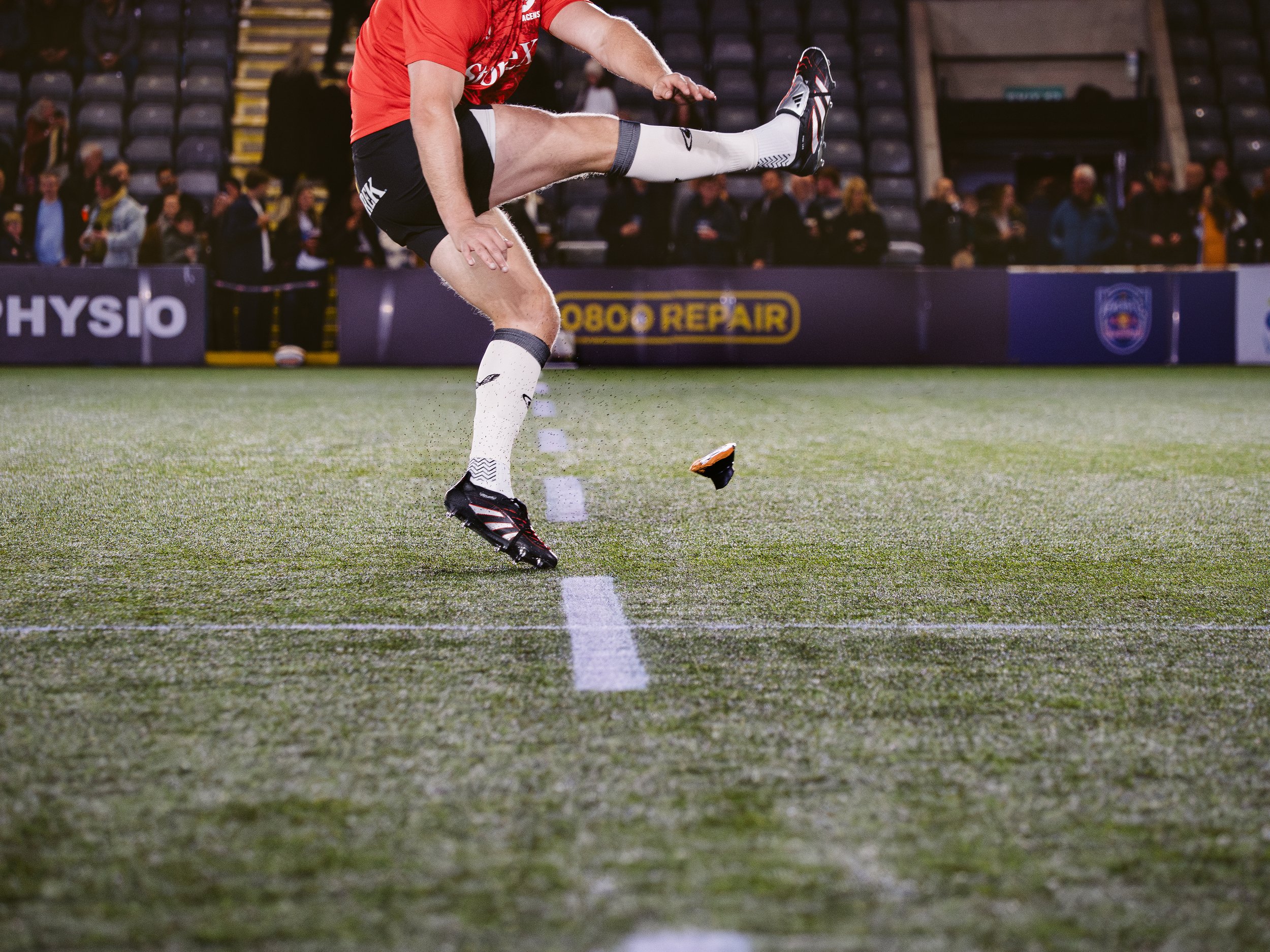
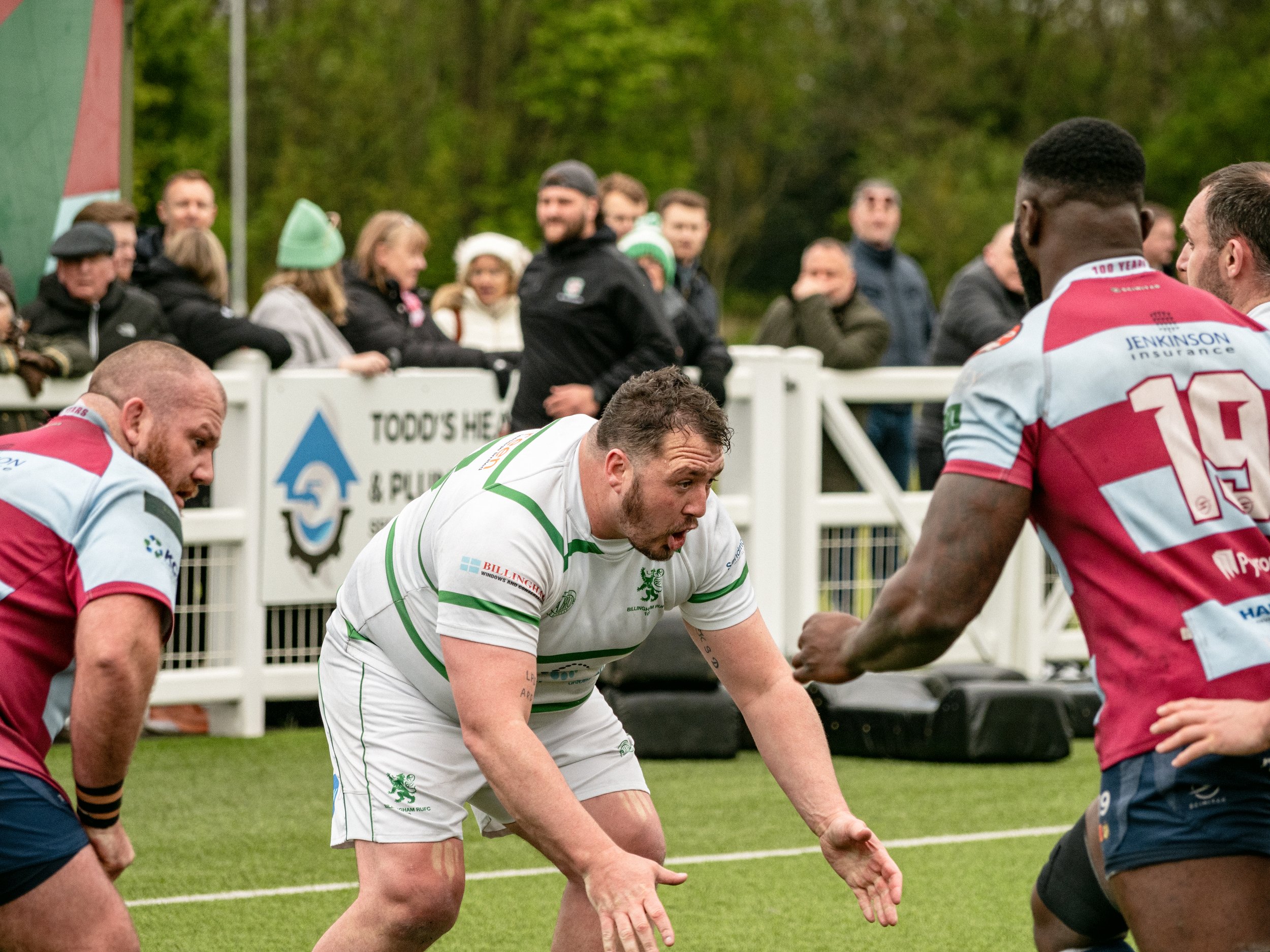
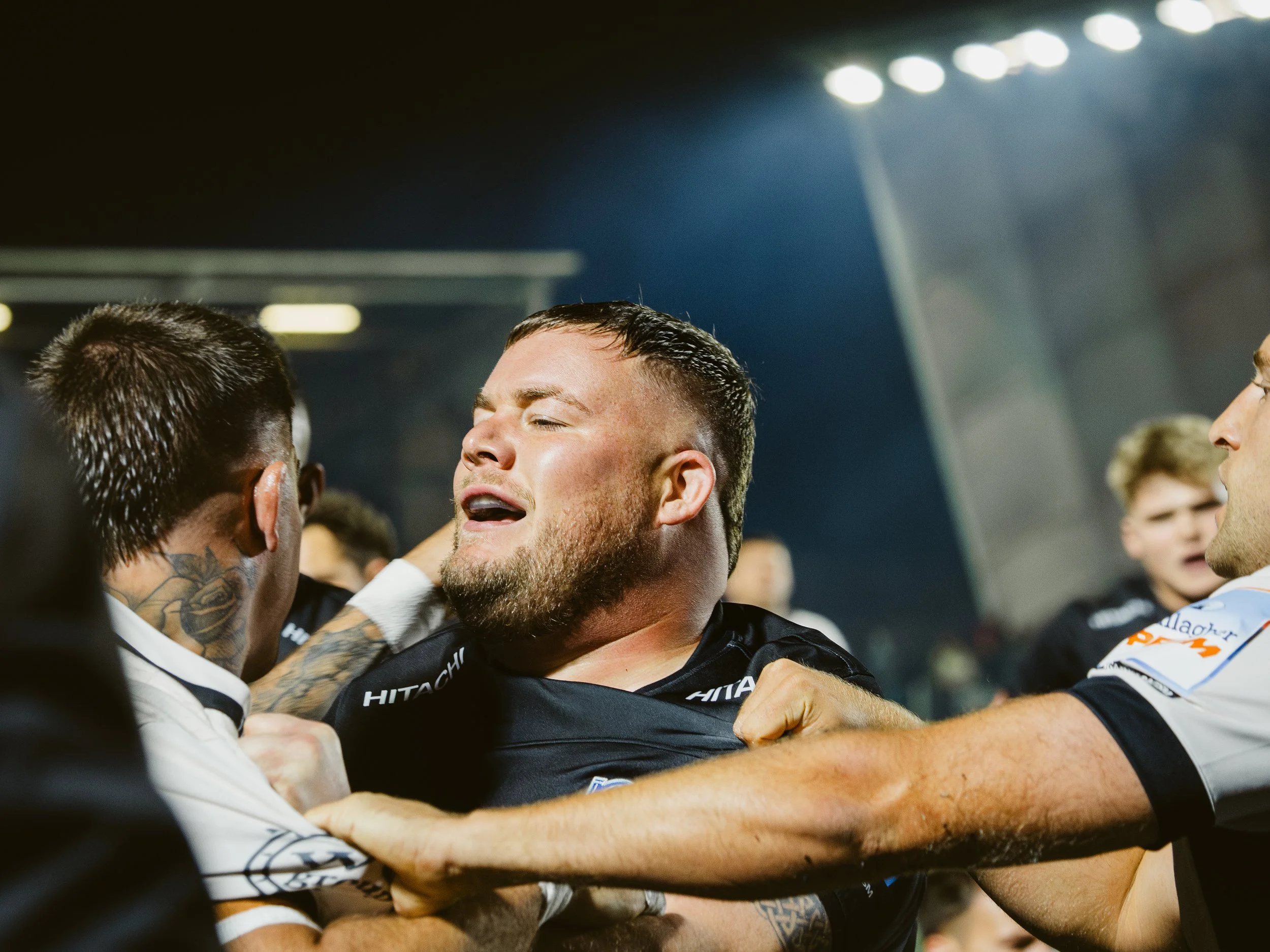
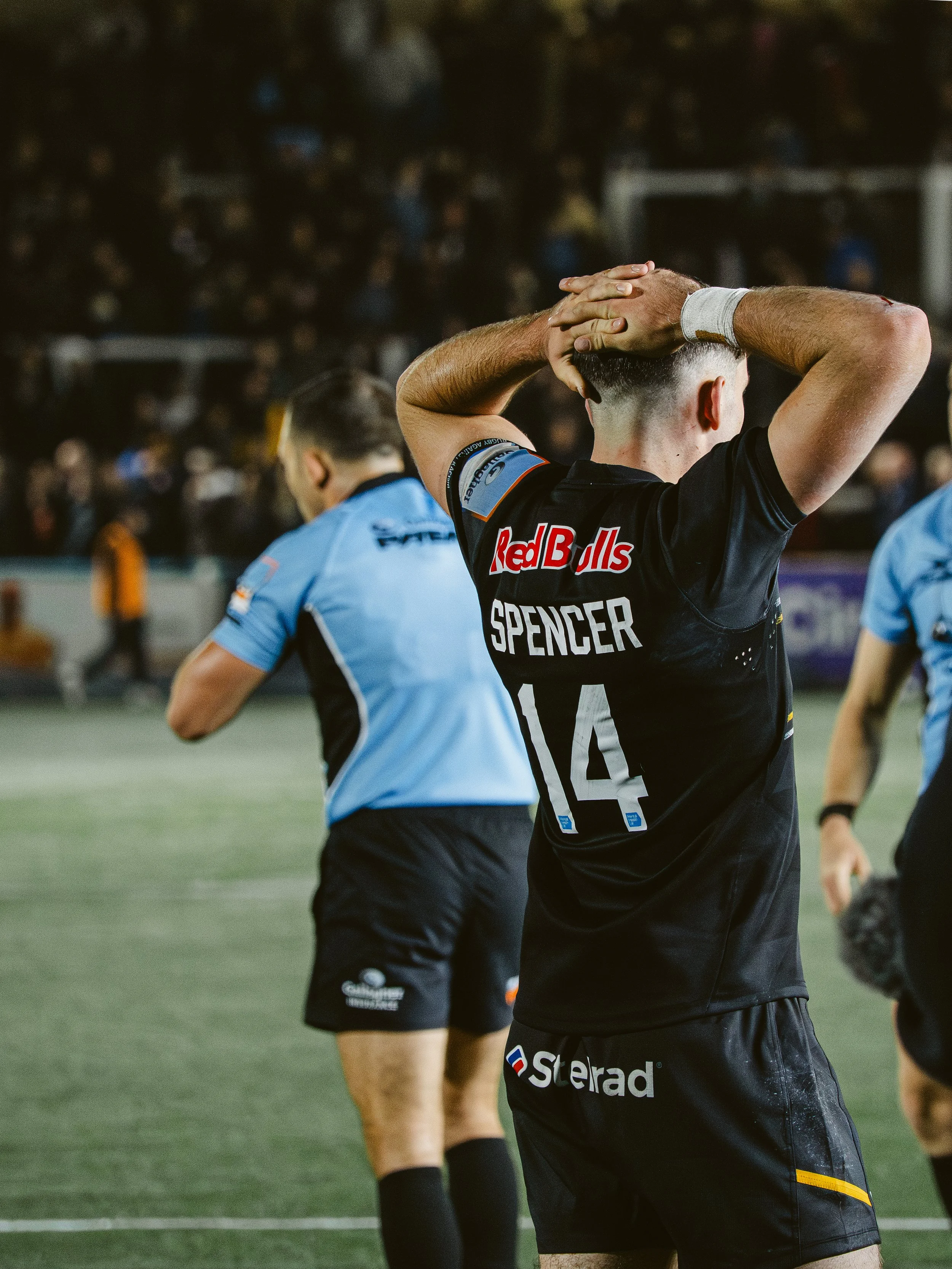
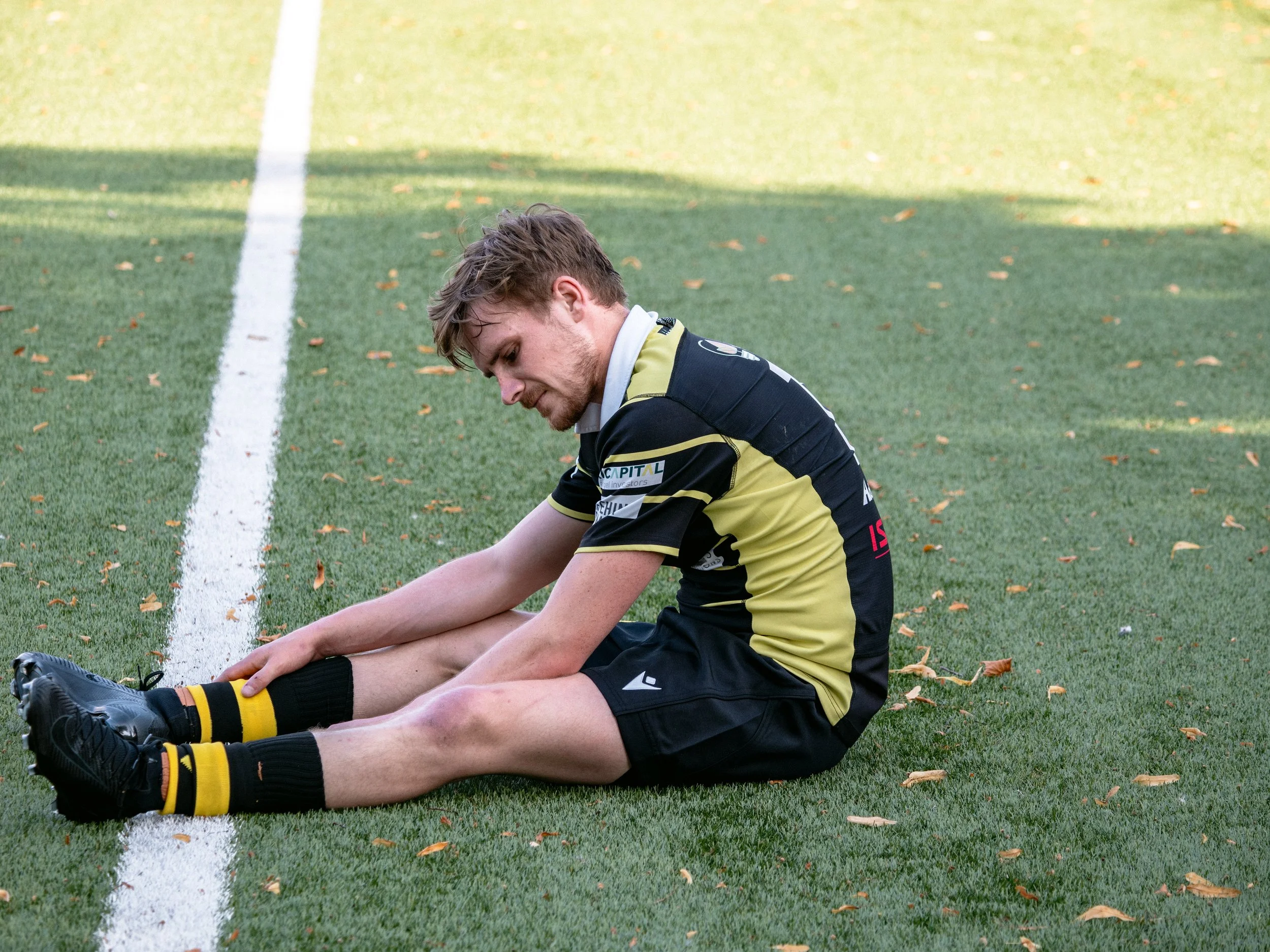
You’ve seen someone kick a rugby ball thousands of times. Do you need one more? Or does your curiosity sharpen when you can’t quite see what’s just happened? A worried glance. The aftermath of a scrum. A tight crop of legs locked in a line-out. For me, those fragments often evoke more feeling than a perfectly clean action shot.
Because that’s how I experience a rugby game. That’s what I see. And that’s how I tell a story.
If you placed another photographer at the same ground with the same brief, they would come back with a completely different body of work. No better. No worse. Just different. Because they would be filtering the day through their own way of seeing. You could argue that someone with a deeper knowledge of rugby would make a stronger sports photographer. And I won’t deny that being able to read the game, anticipate plays and predict movement would make certain shots easier to capture - or at least involve less sprinting up and down the pitch on my part. But someone more immersed in the technicalities of the game might not turn away from the play to photograph the crowd. They might miss the scrum of the audience because they’re focused on the scrum of the players.
An insider sees tactics. I see culture.
And that slight distance - that blend of curiosity and unfamiliarity - allows me to notice things that might otherwise fade into the background. And so to me, one of my storytelling superpowers is my perspective. I’ll never see a rugby match the way a lifelong fan does. But I will see things they might not.
And that’s the story I’m here to tell.